


A New Dawn for Diamonds: Namibia Eyes a Stake in De Beers, Forging a Powerful African Alliance
Windhoek, Namibia – A seismic shift is potentially underway in the global diamond industry as Namibia has officially signaled its ambition to acquire a significant stake in the iconic diamond behemoth, De Beers. The Namibian cabinet has reportedly voted in favor of a proposal for the nation to secure a piece of the company that has dominated its diamond sector for decades. This bold move is not a solo endeavor; Namibia is in strategic discussions with fellow diamond-rich African Alliance, Angola and Botswana, to form a powerful consortium that could redefine the control and future of the world’s most coveted gems.
The proposal, which has garnered significant attention, suggests Namibia is looking to acquire a substantial 10% to 15% stake in De Beers. This development comes as Anglo American, the majority shareholder with an 85% stake in De Beers, is seeking to divest from the diamond industry. This has created a landmark opportunity for producer countries to assert greater control over their natural resources.
The Vision of a Pan-African Diamond Powerhouse
The prospect of a united front from southern Africa’s diamond giants is a game-changer. “We are talking to Angola and Botswana to join forces,” an unnamed Namibian official was quoted as saying in the Namibian Sun. “All three countries recognize that none of them alone can secure a significant share.” The ultimate ambition, as articulated by the official, is for the three nations to “jointly own a majority in De Beers,” a move that would fundamentally alter the global diamond landscape.
This collaborative spirit is underpinned by a shared recognition of their collective strength. Botswana already holds a 15% stake in De Beers and has been vocal about its desire to increase its shareholding, with President Duma Boko recently reiterating that the country is taking “concrete steps” in this direction. Angola, for its part, has also expressed significant interest, initially for a minority stake, but has since reportedly bid for the entirety of Anglo American’s 85% share.
The potential for a unified African front in the diamond industry is not merely about ownership; it’s about steering the future of an industry at a critical juncture. The Luanda Accord, an initiative aimed at strengthening the market for natural diamonds, is a testament to this growing collaboration. By pooling their resources and influence, Namibia, Angola, and Botswana aim to ensure they “remain key decision-makers in the global diamond trade.”
Namibia’s Prized Gems and Strategic Imperatives
For Namibia, the rationale behind this move is deeply rooted in its economic and strategic interests. The nation is renowned for its “superior, high-quality diamonds,” which are predominantly of gem quality and command some of the highest prices per carat in the world. An official emphasized, “We cannot afford to be left out.”
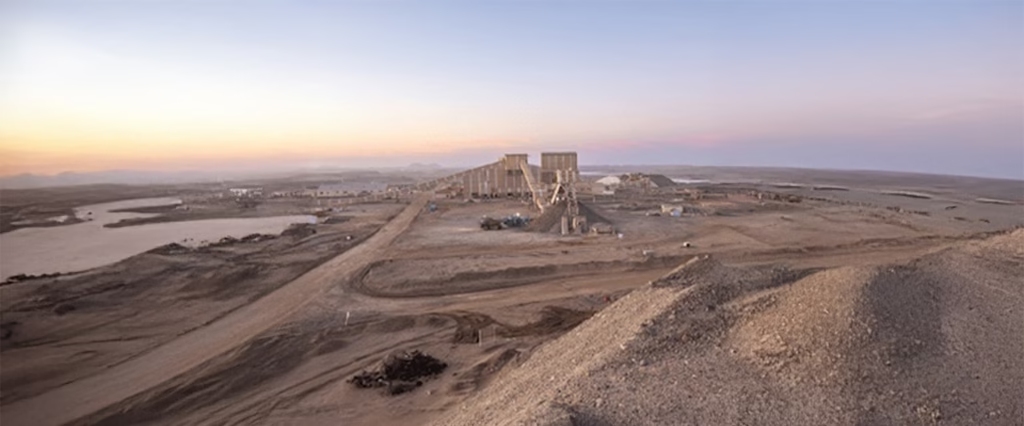
The diamond industry is a cornerstone of the Namibian economy, contributing significantly to its Gross Domestic Product (GDP), employment, and foreign exchange earnings. For decades, the country’s diamond mining operations have been managed through Namdeb, a 50/50 joint venture between the Namibian government and De Beers. This long-standing partnership has been a critical source of revenue and technical expertise. However, the potential to move from a partner in production to a shareholder in the parent company represents a significant step up the value chain.
Despite the enthusiasm, Namibian officials have also expressed a degree of caution, primarily concerning the financial capacity to fund such a significant acquisition. The estimated cost for a 10% to 15% stake is reported to be between NAD 9.8 billion and NAD 14.8 billion (approximately $570 million to $860 million). This financial consideration is a key driver behind the collaborative approach with Angola and Botswana.
A Complex Landscape and Conflicting Signals
While the initial reports from the Namibian Sun indicated a cabinet vote in favor of the proposal, more recent information suggests a more deliberative process is underway. According to some sources, the Namibian government has not yet made a final decision on acquiring a stake in De Beers, and the matter has not been formally tabled before the cabinet. This indicates that while the ambition is clear, the path to a final commitment is still being carefully navigated.
This cautious approach is understandable given the headwinds facing the global diamond industry. The rise of laboratory-grown diamonds has introduced a new competitive dynamic, while a slump in global demand, particularly in key markets, has put downward pressure on prices. Namibian Deputy Prime Minister Natangwe Ithete has previously highlighted these challenges, stating, “the diamond industry is going down…this is something we need to study very carefully, to determine whether it is worth pursuing or not.”
The Broader Context: A Shifting Global Diamond Order
The potential acquisition of a De Beers stake by a consortium of African nations is unfolding against the backdrop of a broader realignment in the diamond world. Anglo American’s decision to offload its De Beers shares is part of a strategic pivot towards other minerals. This has created a vacuum and an opportunity for new ownership structures to emerge.
Botswana, which hosts the majority of De Beers’ production, sees this as a pivotal moment for its economic sovereignty. President Duma Boko’s firm stance on acquiring a controlling interest underscores the nation’s determination to have a greater say in an industry that is central to its prosperity.
Angola’s ambitious bid for Anglo American’s entire stake further complicates and electrifies the situation. The southern African nation has been actively reforming its mining sector to attract investment and is keen to establish itself as a major player in the global diamond trade. An Angolan proposal for a balanced international ownership structure that includes Botswana, Namibia, and South Africa, ensuring no single country dominates, highlights a sophisticated and strategic approach.
The formation of a powerful African bloc within De Beers’ ownership could have far-reaching implications. It would give these nations unprecedented influence over production levels, pricing strategies, and marketing efforts. This aligns with the objectives of the Luanda Accord, which seeks to collectively promote and protect the allure of natural diamonds in the face of competition from synthetic alternatives.
As the world watches, the intricate dance between Namibia, Angola, and Botswana continues. Their ability to navigate financial hurdles and align their strategic interests will determine whether this bold vision of an African-led future for De Beers becomes a reality. What is certain is that the winds of change are blowing through the diamond industry, and the nations that are the source of its wealth are no longer content to be passive participants in its destiny.
