


Swarovski in Transition: A Deeper Look at the 400 Job Cuts at its Austrian Heartland
The famed Austrian crystal maker, Swarovski, is once again in the midst of a significant corporate restructuring, announcing the reduction of 400 jobs at its historic headquarters in Wattens, Austria. This move, part of a broader streamlining of its global operations, signals a complex period of adjustment for the iconic brand as it navigates a challenging global market. The staff restructuring is slated to begin in January and will continue through the end of the following year, employing a mix of layoffs, voluntary departures, and retirements to achieve the targeted workforce reduction.
The Human and Operational Impact of the Restructuring
Beyond the headline number of 400 job losses, the changes at the Wattens headquarters are multifaceted. In an effort to mitigate the impact and adjust to new production realities, all employees at the location have been offered a 10% reduction in their working hours. Operationally, the company is also scaling back its three-shift system to two, eliminating the night shift which, according to company statements, represents a significant cost. This will reduce the number of employees at the site from approximately 2,480 to around 2,100 by the end of 2026.
The company has emphasized its commitment to handling this process with “humanity, respect, and transparency,” in line with its corporate values and existing social plan frameworks. A social plan has been worked out with the works council, including an investment of 11,000 euros in a foundation to support affected employees with financial assistance, retraining, and help in finding new employment.
A Tale of Two Businesses: The Rationale Behind the Cuts
The decision to downsize at its headquarters presents a “paradoxical situation,” as described by Wattens general manager Jerome Dandrieux. While Swarovski’s direct-to-consumer jewelry business is reportedly showing “robust figures,” the Wattens facility is heavily reliant on the business-to-business (B2B) segment. This division, which produces crystals for other companies, is facing a significant downturn.
Headwinds in Key Markets: China and the Luxury Sector
A key factor cited for the B2B weakness is the challenging outlook in two critical markets: China and the broader luxury industry. Dandrieux explicitly stated, “we have no good prospects in China and in the luxury industry.” This points to a potential saturation or slowdown in demand from these sectors, which have long been significant drivers of growth for luxury component suppliers like Swarovski. The automotive industry, another area where Swarovski is increasingly supplying crystal components, is also facing its own set of difficulties, further impacting the Wattens B2B business.
However, the narrative around China is not entirely straightforward. While the B2B outlook may be bleak, recent reports from early 2024 indicated double-digit revenue growth for Swarovski in China, a market that has been a major focus for the company. In fact, China has been identified as Swarovski’s biggest market. The company has been actively renovating its store network in the country and has expressed a commitment to “steady growth” in the region. This suggests that while the demand from Chinese businesses for Swarovski crystals as components may be waning, the brand’s direct consumer appeal in the country remains strong.
The High Cost of Austrian Production
Compounding the external market challenges are the high costs associated with production in Austria. The company has pointed to significant expenses related to labor, energy, and raw materials as a contributing factor to the need for restructuring. This highlights a broader trend of manufacturing challenges within Europe, where high operational costs can impact global competitiveness.
The LUXignite Strategy: A Beacon of Success Amidst the Turmoil
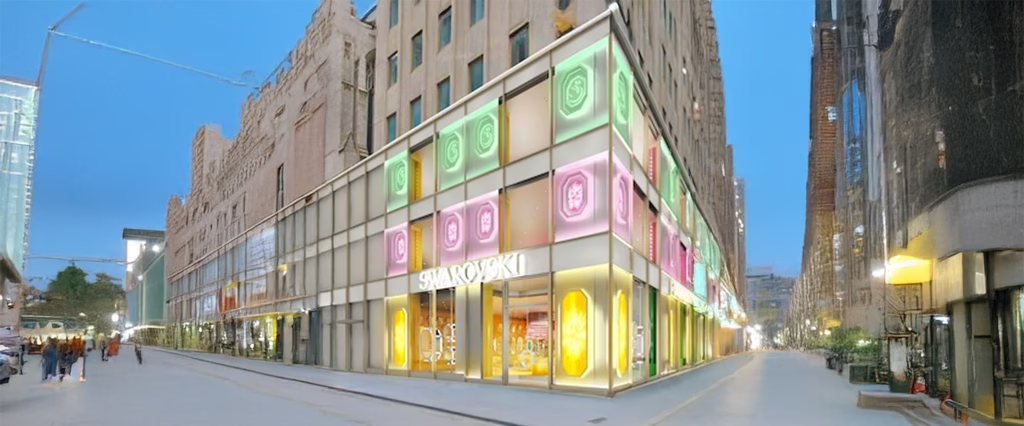
This restructuring is not happening in a vacuum. It is part of a broader strategic realignment under the banner of “LUXignite.” This strategy, which aims to reposition Swarovski in the “attainable luxury” segment, has been credited with achieving “well above market results.” The LUXignite strategy involves a refreshed brand identity, new product collections, and a focus on creating unique and immersive retail experiences.
A company spokesperson stated that the current streamlining of its global organization, which affects approximately 3% of the total workforce primarily in Switzerland, Austria, and Liechtenstein, is necessary to maintain the momentum generated by the LUXignite strategy. This suggests a strategic pivot to consolidate gains and enhance productivity in the face of a “difficult macroeconomic and geopolitical context.”
A History of Transformation: The Broader Context of Swarovski’s Evolution
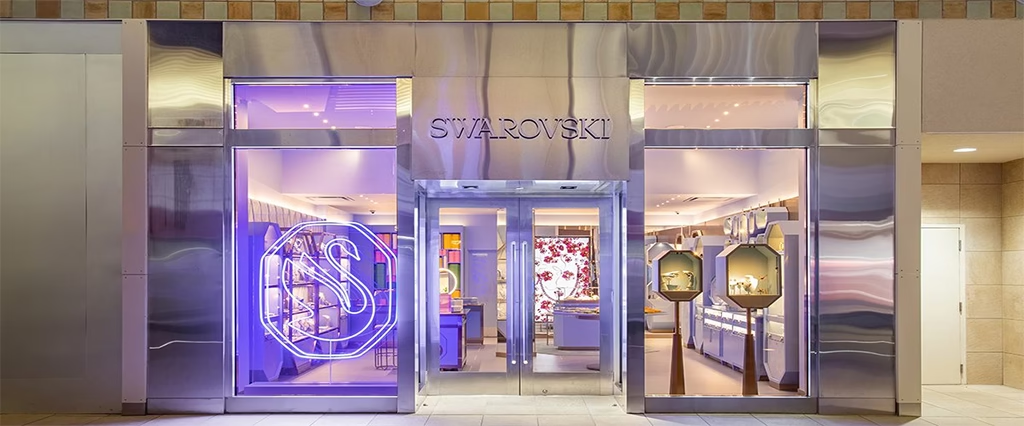
It is important to view these latest job cuts as part of a longer and more profound transformation for the 125-year-old company. In 2020, Swarovski embarked on a much larger and more radical restructuring effort, which included the elimination of 6,000 jobs—over 20% of its total workforce—and the closure of numerous stores. That major overhaul was driven by the impact of the COVID-19 pandemic and a strategic decision to move away from the low-margin mass market and focus on more exclusive and higher-margin jewelry products.
The current measures at Wattens can be seen as a continuation of this strategic refinement, a targeted adjustment to specific underperforming segments of the business while the more successful consumer-facing divisions continue to thrive under the LUXignite banner. The company has made it clear that doing nothing now could lead to “more difficult decisions in a year.”
Despite the workforce reduction, Swarovski has also expressed a commitment to the Wattens location, with plans to invest 150 million euros in the site by 2030 to stabilize the core business and attract new customers. This indicates a long-term vision for its Austrian heartland, albeit with a leaner and more focused operational footprint. The future for Swarovski, it seems, will be one of continued adaptation and a relentless focus on navigating the complexities of the modern luxury market.
