


A Legacy in Gold: Hancocks London Unveils a Breathtaking John Rubel Cuff from a Bygone Era of Glamour
In the world of high jewellery, some stories are whispered in hushed tones, tales of forgotten masters whose hands shaped the most iconic designs of the 20th century. Hancocks London, a venerable institution in the heart of Mayfair, has just pulled back the curtain on one such story, presenting a magnificent jewel that is as rich in history as it is in gold and gemstones. For its August Jewel of the Month, Hancocks has selected a rare and sculptural gem-set cuff by John Rubel, a name that resonates with profound significance for discerning collectors. This is not merely a bracelet; it is a wearable testament to a pivotal moment in design history, a piece that encapsulates the bold, optimistic spirit of the post-war world.
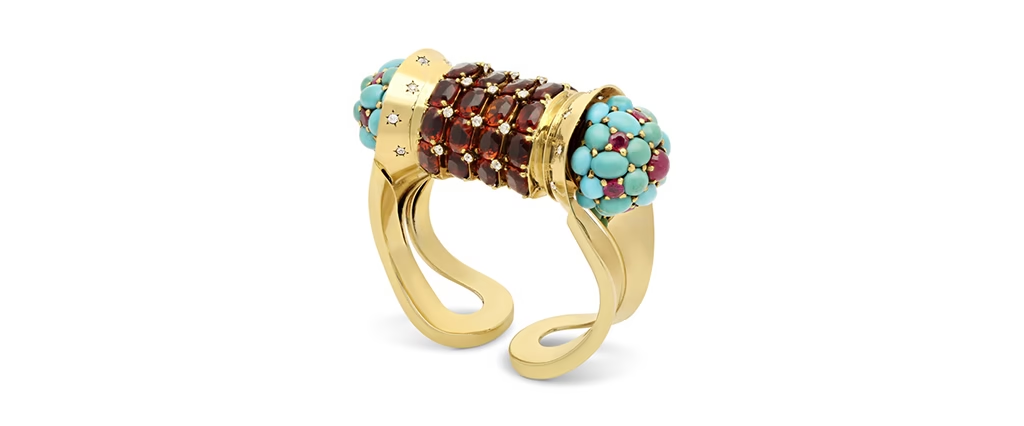
Dating to circa 1945, the 18-karat yellow gold Rouleau cuff is a masterpiece of form and color. Priced at £48,500 (approximately $65,000), its value is underpinned not only by its intrinsic materials but by its exceptional rarity and impeccable provenance, which is confirmed by a certificate of authenticity. This piece hails from a brief, incandescent period when John Rubel, after years as the genius behind the curtain for other legendary houses, stepped into the spotlight to create under his own name. To own this cuff is to own a chapter of his elusive and fascinating story.
A Symphony of Design and Craftsmanship
The immediate impression of the cuff is one of audacious, sculptural beauty. The design is a celebration of volume, color, and texture, masterfully executed with the refined techniques of French haute joaillerie. It is a piece that demands attention, exuding confidence and a joyful, unapologetic glamour that defined the era of its creation.
The Sun-Kissed Heart of Cognac Citrine
At the very center of this magnificent creation lies a powerful and radiant barrel, a “Rouleau” cylinder that gives the cuff its name. This central element is pavé-set with four spectacular rows of cushion-cut citrines, glowing with the deep, warm hue of fine cognac. The 28 individual stones, weighing a significant total of approximately 24 carats, are each secured by delicate claws in rich 18-karat yellow gold. The cushion cut, with its soft, rounded corners and large facets, is expertly chosen to maximize the stone’s inner fire, allowing light to dance within each gem and cast a honeyed, golden glow. Interspersed between these radiant citrines are small, twinkling old-cut diamonds, adding subtle sparks of white brilliance that contrast beautifully with the warmth of the gold and the central stones.
Sculptural Goldwork and Hidden Ingenuity
Flanking the citrine-studded barrel are two dramatic fan-shaped motifs, crafted from polished and textured yellow gold. These elements lend the cuff a sense of dynamism and architectural grace, reminiscent of the stylised natural forms popular in the 1940s. The surface of these fans is not left unadorned; they are discreetly decorated with star-set diamonds, a technique where a diamond is set flush into the gold and then engraved with a starburst pattern, creating a celestial sparkle.
The design culminates in voluptuous bombé terminals—smooth, domed ends that provide a sensuous and satisfying visual weight to the piece. These terminals are inlaid with a vibrant and classic combination of gems: smooth, opaque cabochons of sky-blue turquoise and the rich, crimson fire of faceted rubies. This daring color pairing of warm gold, deep orange, bright blue, and vivid red is a hallmark of the Retro period’s fearless aesthetic. Beyond its visual splendour, the cuff hides a secret: an innovative swivelling mechanism. This feat of engineering allows the bracelet to open and close with elegant ease, a thoughtful and practical detail that speaks volumes about the quality of its construction and the consideration given to the wearer.
John Rubel: The Unsung Hero of 20th-Century Jewellery
To truly appreciate this cuff, one must understand the man who created it. John Rubel was not just a jeweller; he was a key figure in one of the most important creative dynasties in Parisian jewellery, the Rubel Frères. The story of the Rubel brothers—John and Robert—is one of immense talent, transatlantic ambition, and a legacy that was for decades intertwined with, and often overshadowed by, the legendary house of Van Cleef & Arpels.
From Paris to New York: The Rubel Frères Saga
The Rubel brothers operated a highly respected workshop in Paris, becoming the go-to artisans for the most demanding jewellery houses of the 1920s and 30s. Their skill in crafting complex and exquisite pieces was so renowned that Van Cleef & Arpels entrusted them with the production of some of their most iconic and technically challenging creations. When the clouds of war gathered over Europe in 1939, the Rubel family, along with the Van Arpels family, made the momentous decision to move to New York City, bringing the pinnacle of French jewellery design to American shores.
It was in New York that the Rubel legend took on a new dimension. While still producing for Van Cleef & Arpels, it was John Rubel’s creative spark that ignited one of the most beloved motifs in jewellery history: the ballerina brooches. The story goes that Rubel, captivated by the energy of Spanish dancers in a New York flamenco club, began sketching their dynamic forms. These sketches became the basis for the enchanting ballerina and fairy clips, first produced for VC&A, which remain some of the most sought-after and recognizable jewels ever made.
A Brief, Bright Flame: The Independent John Rubel Co.
In 1943, after years of creating masterpieces for others, John Rubel made the bold move to establish his own independent company, the John Rubel Co., on Fifth Avenue. This cuff dates precisely to this period of artistic and commercial independence, which lasted until the mid-1950s. This context makes the piece exponentially more significant. It is not a jewel made under the direction of another house; it is a pure expression of Rubel’s own design ethos, created during the brief window when his name was on the door. It represents his personal vision, blending the impeccable craftsmanship he was known for with the bold, confident aesthetic of his new American home.
A Mirror to its Time: The Bold Post-War Aesthetic
The Hancocks cuff is a perfect artifact of the “Retro” period in jewellery, a style that dominated the 1940s and early 1950s. Emerging from the austerity and turmoil of World War II, this aesthetic was a powerful statement of hope, strength, and a return to glamour.
“This is an incredible cuff—sculptural, colorful, and totally glamorous,” commented Hancocks London’s Creative Director, Amy Burton. Her assessment perfectly captures the essence of the piece and its era. She adds that the jewel “encapsulates the postwar aesthetic where bold, color pairings were embraced with refined French craftsmanship, and where designs reflected confidence and strength.”
During the war, platinum was a strategic material reserved for military use, so jewellers turned to gold, particularly yellow and rose gold. This necessity became a stylistic signature, leading to the creation of large, voluminous, and highly polished gold pieces. The designs moved away from the delicate, geometric lines of the preceding Art Deco period and towards big, bold, three-dimensional forms like scrolls, fans, ribbons, and shells, just as seen in this cuff. Semi-precious stones like citrine, aquamarine, and amethyst were used generously, prized for their size and vibrant color, offering a cheerful and accessible luxury. This Hancocks cuff, with its substantial goldwork, large citrines, and confident use of turquoise and rubies, is a quintessential example of this powerful and optimistic design language.
Hancocks London: A Custodian of Jewellery History
It is fitting that this rare John Rubel cuff has found its way to Hancocks London. Established in 1849, Hancocks has built an unparalleled reputation as a purveyor of the finest antique and vintage jewellery. Their salon in the Burlington Arcade is a destination for collectors and connoisseurs seeking pieces with exceptional provenance, quality, and character. By selecting this cuff as its Jewel of the Month, Hancocks not only highlights a spectacular object but also continues its role as an educator and storyteller, shining a light on the often-overlooked figures who shaped jewellery history.
This magnificent Rouleau cuff is more than just an accessory. It is a tangible piece of art history, a direct link to the independent vision of a master craftsman, and a vibrant symbol of a world reborn. For the collector who acquires it, it offers not just the pleasure of wearing a beautiful and glamorous jewel, but the deep satisfaction of owning a rare artifact from the brief, brilliant moment when John Rubel finally signed his own name to his work.
