

In the world of high-end jewelry, the vessel has become as vital as the treasure it holds. As we step into 2026, jewelry packaging has evolved from a mere protective shell into a sophisticated medium for brand philosophy, environmental ethics, and digital storytelling. This year marks the definitive shift toward “Conscious Luxury”—a movement where opulence is measured by its impact on the planet and its depth of connection with the consumer.
Based on industry shifts observed between 2024 and 2025, we predict four core trends that will dominate the landscape in 2026.
1. Radical Transparency: The Rise of “Supply Chain Storytelling”
By 2026, consumers no longer accept “sustainable” as a vague marketing claim; they demand proof. We are seeing a shift from simple recycled materials to radical transparency.
- Historical Context (2024-2025): In early 2024, Pandora made headlines by completing its transition to 100% recycled silver and gold, significantly reducing its carbon footprint. Simultaneously, the Kering Generation Award x Jewelry (2024) highlighted material innovations like “lab-grown” packaging components.
- 2026 Prediction: Packaging will become the primary vehicle for Digital Product Passports (DPP). Using invisible NFC (Near Field Communication) chips or micro-QR codes embedded in the box structure, brands will allow customers to scan their packaging to trace the jewelry’s journey—from the ethical mining of gemstones to the carbon-neutral manufacturing of the box itself.
- Material Innovation: Look for Carbon-Negative Mycelium (mushroom-based) inserts and Post-Consumer Recycled (PCR) paperboard that mimics the weight and rigidity of traditional plastic-based rigid boxes.
2. Sensory Minimalism: “Warm Simplicity” Over Visual Noise
The era of loud, glossy logos and excessive gold foil is being replaced by “Sensory Minimalism.” The focus has shifted from what the eye sees to what the hand feels.
- Historical Context (2024-2025): The “Maillard Color” trend of 2024—characterized by warm browns, terracottas, and deep oranges—saw emerging luxury brands achieve up to an 18% increase in repurchase rates by using matte, tactile textures that evoked a sense of “quiet luxury.”
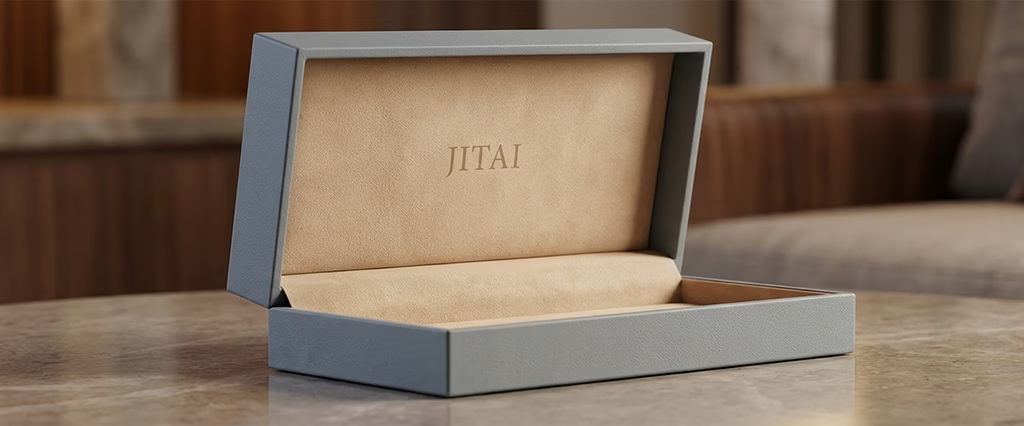
- 2026 Prediction: We anticipate a palette of “Sun-Bathed Neutrals”—hazy blues, slate grays, and warm, off-white beiges that avoid the sterile “digital white” of the past.
- Tactile Innovation: Instead of printed logos, Blind Embossing (creating a raised or recessed image without ink) will be the preferred method for branding. Materials like Bio-based Suede and Linen-textured Satin Paper will provide a “second-skin” tactile experience that makes the unboxing feel like a personal ceremony.
3. The “Phygital” Unboxing: Packaging as a Living Asset
In 2026, the boundary between the physical and digital worlds—”Phygital”—has blurred. Packaging is no longer static; it is an interactive portal.
- Historical Context (2024-2025): Brands like Tiffany & Co. began experimenting with AR (Augmented Reality) in 2024, allowing users to scan their iconic blue boxes to see a digital animation of the jewelry’s design process.
- 2026 Prediction: NFC technology penetration will exceed 20% in the high-end jewelry market. When a customer brings their smartphone near the box, it won’t just show a website; it will unlock a personalized “Owner’s Portal,” featuring AR styling guides, virtual “try-on” filters for social media, and exclusive access to brand events. The packaging thus becomes a “living asset” that continues to provide value long after the initial purchase.
4. The Zero-Waste Keepsake: Design for Disassembly
The ultimate sustainability goal for 2026 is the elimination of “waste” through modularity and multi-functionality.
- Historical Context (2024-2025): Brands like Gorjana and David Yurman popularized jewelry boxes that doubled as travel cases or stackable storage units, encouraging customers to keep the packaging rather than discard it.
- 2026 Prediction: The “Design for Disassembly” principle will become the industry standard. This means packaging is engineered to be easily taken apart—magnets can be popped out, velvet linings removed, and paperboard recycled separately. More importantly, jewelry boxes are being designed as Decorative Artifacts—sculptural pieces made of wood, stone, or high-end recycled glass that serve as elegant home decor long after the jewelry has been worn.
Conclusion
The jewelry packaging of 2026 is a masterclass in contradiction: it is high-tech yet deeply organic; minimalist yet rich in detail; temporary in its unboxing moment but permanent in its environmental and emotional value. For brands like JITAI, the challenge—and the opportunity—lies in crafting a vessel that doesn’t just hold a necklace, but holds a promise of a more conscious and connected future.
What is the significance of transparency in jewelry packaging in 2026?
In 2026, transparency will be central to jewelry packaging, with brands using Digital Product Passports embedded in packaging to tell the jewelry’s ethical and environmental story, allowing consumers to scan and trace the product’s journey.
How will sensory minimalism influence jewelry packaging design in 2026?
Sensory minimalism will lead to packaging that emphasizes tactile experience and warm, neutral color palettes, moving away from glossy logos to textures like blind embossing and materials such as bio-based suede and linen-textured paper to evoke quiet luxury.
What does the ‘Phygital’ unboxing experience entail for luxury jewelry brands?
The ‘Phygital’ unboxing experience combines physical packaging with digital interactivity, allowing consumers to use NFC technology for AR features, virtual styling guides, and exclusive content, transforming packaging into a living, value-adding asset.
What are the sustainability trends expected in jewelry packaging for 2026?
Sustainable trends include the adoption of packaging designed for disassembly, made from recyclable materials like mushroom-based inserts and recycled glass, as well as modular, multi-use boxes that serve as decorative artifacts and reduce waste.
How is jewelry packaging expected to balance high-tech features with organic aesthetic in 2026?
In 2026, jewelry packaging will harmonize technological innovations such as digital passports and NFC with organic design elements, creating high-tech yet natural, minimalist designs that provide emotional and environmental longevity.