


How to sew a jewellery pouch
Tired of untangling your favourite necklace when you travel? Or perhaps you’re looking for a handmade touch to present a small gift? This simple sewing project solves both problems, giving you a lovely, functional item you can create in an afternoon.
Designed specifically for the absolute beginner, this tutorial proves that you don’t need any prior experience to make something beautiful and useful. In about an hour, you’ll turn a small piece of fabric into a handmade travel jewellery case that you can be proud of.
What You’ll Need: Choosing the Perfect Fabric and Tools
The best fabric for a beginner-friendly jewellery pouch is quilting cotton. It’s sturdy, non-stretchy, and doesn’t slip while you’re cutting and sewing. This project is also perfect for using up small fabric scraps, as you only need a piece about the size of a standard sheet of paper.
You also don’t need a special cord for the drawstring. A simple ribbon, a new shoelace, or even a piece of thick yarn will work beautifully and add a personal touch.
Here is the short list of everything you’ll need:
- One piece of quilting cotton fabric (approx. 23cm x 50cm or 9″ x 20″)
- All-purpose thread that matches your fabric
- A ruler and scissors
- A safety pin
- An iron
- A sewing machine (or needle, if sewing by hand)
Step 1: How to Measure and Cut Your Fabric
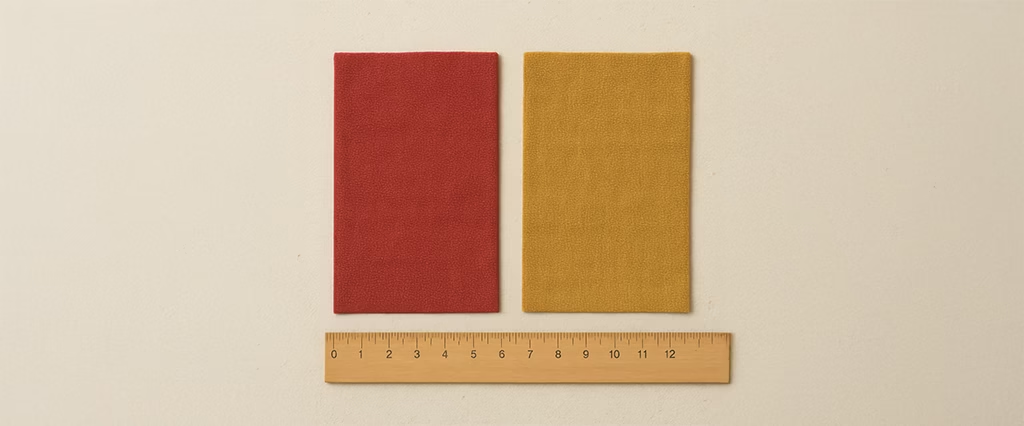
Lay your fabric flat and use a ruler to carefully measure two pieces, each 12.5cm wide and 18cm tall (5 x 7 inches). You can mark these lines lightly with a pencil or fabric chalk to guide you.
Now, take your scissors and cut slowly and steadily along your measurements. The goal is to get two pieces that are roughly the same size. Once you’re done, you’ll have two separate rectangles ready for sewing.
Step 2: How to Sew the Main Pouch and Lock Your Stitches
Place your two fabric rectangles one on top of the other with the patterned sides facing each other. This is called placing the fabric right sides together, and it ensures your seam will be hidden on the inside. Pin the two long sides and one short side, leaving the top open.
Instead of sewing on the very edge, we’ll create a small border called a seam allowance. For this project, use a 1.25cm (1/2-inch) seam allowance. This gives your stitches plenty of fabric to grip, making your drawstring bag strong and durable.
To ensure your stitches don’t unravel, lock them in place with a backstitch. At your machine, sew forward three or four stitches, then press the reverse button to sew backward over them. Let go and continue sewing forward. Repeat this at the end of the seam.
Starting at one of the top open corners, use your 1.25cm (1/2-inch) seam allowance and backstitch to secure your thread. Sew down the long side, pivot at the corner, continue across the short bottom, and pivot again to sew up the final long side. Remember to backstitch at the end. You’ve now sewn the main body of your pouch.
Step 3: How to Create the Tunnel for Your Drawstring
With the main body sewn, it’s time to create the drawstring closure. Turn your pouch right-side out. Using an iron, press the top raw edge down towards the inside by about 1.25cm (1/2 inch). This press creates a tidy guideline.
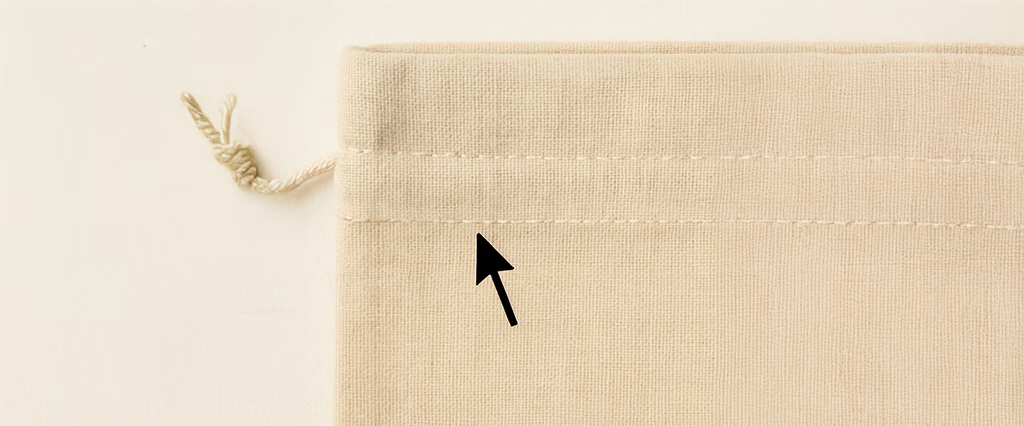
To form the tunnel, or casing, fold that pressed edge down again, this time by about 2.5cm (1 inch). This second fold tucks the raw edge away so no frayed bits will show. Pin this wide fold in place all the way around the top of the pouch.
To create the tunnel without accidentally sewing your pouch shut, stitch a single straight line along the bottom edge of the fold you just pinned. This secures the casing while leaving the top open, forming a perfect channel for the drawstring.
Step 4: How to Easily Thread Your Drawstring
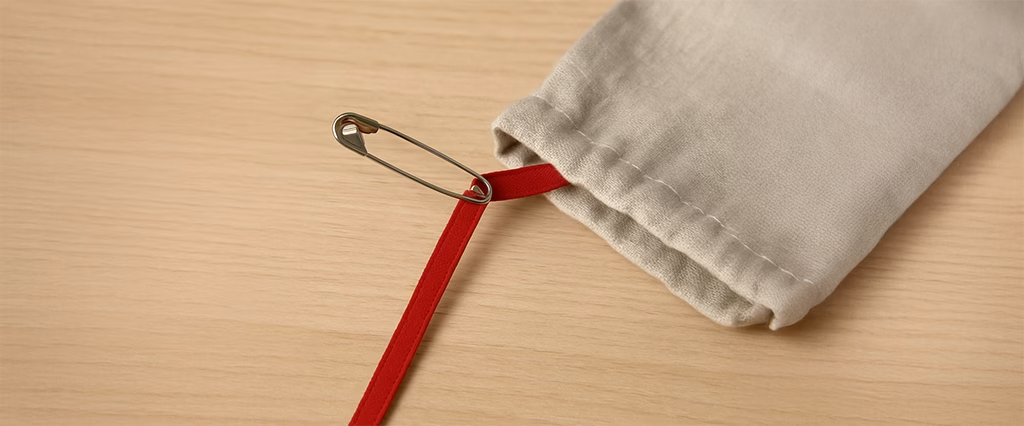
This final step uses a simple safety pin. Attach the pin to one end of your ribbon or cord, then push it into the casing’s opening. The pin acts as a guide, letting you easily scrunch the fabric and feed the cord through the tunnel until it pops out where you started.
For the drawstring, a good length is twice the width of your finished pouch, plus about 15cm (6 inches) for tying. After threading it through, remove the safety pin and tie a small, tight knot at each end of the cord to stop it from disappearing back inside.
Pull the cords, and watch your pouch cinch closed! You’ve just learned how to make a small drawstring bag.
No Sewing Machine? How to Make This Pouch with Fabric Glue
Don’t have a sewing machine? You can still create this pouch using permanent fabric glue. This adhesive is designed to bond fabric fibres, creating a flexible and surprisingly strong ‘seam’ that holds up to gentle use.
Instead of a line of stitches, run a thin, even line of glue where your seam would be. Use less than you think you need to prevent it from soaking through the fabric. Press the two layers together firmly and let it dry completely according to the package directions.
All the other steps are exactly the same. You’ll still cut your fabric, fold the casing for the drawstring, and thread it through with a safety pin. Once your glue is fully cured, your no-sew pouch is complete.
You Did It! Next Steps for Your New Sewing Skills
Take a moment to admire your finished pouch. You didn’t just follow steps; you learned foundational sewing skills: cutting accurately, stitching a strong seam, and forming a casing for a drawstring.
This pouch makes a thoughtful gift or a protective case for your own jewellery. As you plan your next one, consider a simple upgrade: adding a divider to keep items from tangling. To do this, simply stitch one straight line down the middle of your fabric before you sew the pouch sides together. You already have the skills needed to take on your next creative project.