


Estate, Antique, and Vintage: Why These Timeless Jewels Will Define the Luxury Market in 2026
The jewelry industry is standing at a historic crossroads. As we move into 2026, the obsession with the “latest and greatest” is being replaced by a profound yearning for the “storied and soulful.” All market indicators suggest that antique, estate, and vintage jewelry are no longer niche categories for collectors; they are becoming the primary drivers of the luxury jewelry market. From high-end retailers and international trade shows to the digital feeds of Gen Z influencers, the “new to you” movement is reshaping how we define luxury, value, and personal style.
This shift isn’t just a fleeting fashion cycle. It is a perfect storm of economic changes, celebrity influence, and a generational pivot toward sustainable consumption. Here is an in-depth look at why 2026 is destined to be the year of the heirloom.
The Cultural Catalyst: The “Taylor Swift Effect” and Celebrity Influence
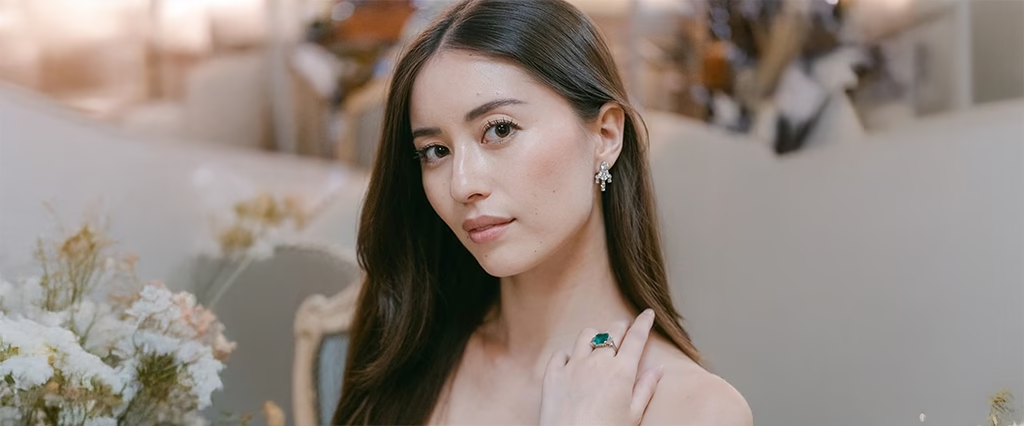
In the world of jewelry, one high-profile moment can shift global demand overnight. In late 2025, the internet exploded when pop icon Taylor Swift accepted a proposal featuring a vintage-style old-mine brilliant-cut diamond engagement ring. This single event did more than just spark headlines; it validated the aesthetic of “old world” charm for a new generation.
Unlike the precise, laser-cut symmetry of modern round brilliants, old-mine cuts possess a soft, romantic glow that reflects candlelight beautifully. This “Swift Effect” has sent consumers searching for pieces that look like they have a history. It isn’t just about the diamond; it’s about the soul of the stone. In 2026, we expect to see a massive surge in demand for Victorian and Edwardian engagement rings as couples move away from “cookie-cutter” luxury in favor of something unique and irreplaceable.
The Growth of the “New to You” Marketplace
The momentum behind vintage jewelry is perhaps most visible in the rapid expansion of specialized trade shows. Konstantinos I. Leoussis, the founder of KIL Promotions and the NYC Jewelry, Antique, & Object Show (NYCJAOS), has witnessed this surge firsthand. Following a sold-out autumn edition in late 2025 that saw nearly 7,000 attendees, the demand was so overwhelming that a new winter edition was added to the 2026 calendar.
Scheduled for January 23–25, 2026, at the New York Hilton Midtown, this expansion signals a shift in the traditional retail calendar. January, once a quiet month for the jewelry trade, is now a prime window for “luxury thrifting.” By moving to a more accessible Midtown location, show organizers are catering to a broader demographic—ranging from seasoned estate dealers to young professionals looking for their first investment piece. This democratization of the antique world is a key pillar of the 2026 trend.
Economic Drivers: Tariffs and the Rise of the Resale Premium
While the aesthetic appeal of vintage is undeniable, the 2026 boom is also being fueled by hard economic realities. According to the sixth edition of the Clair Report by luxury resale platform Rebag, global trade shifts and tariffs introduced in 2025 have significantly impacted the primary luxury market.
The Impact of Import Tariffs
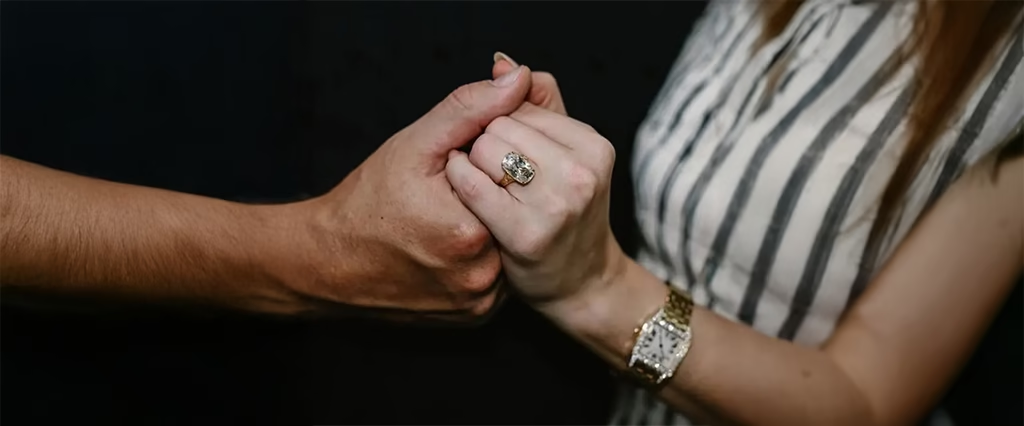
Increased tariffs on imported luxury goods have driven up the prices of brand-new handbags, watches, and fine jewelry. As the cost of a new Cartier Love Bracelet or a Rolex Submariner climbs at retail, the secondary market becomes increasingly attractive. Consumers are realizing that they can often find the same iconic designs—sometimes in better quality or with more unique older hallmarks—at a more stable price point in the estate market.
The Power of “The Big Three”
Rebag predicts that 2026 will see consumers “snapping up” heritage brands like Van Cleef & Arpels, Rolex, and Cartier in the secondhand marketplace. These brands hold their value exceptionally well, making them “wearable investments.” In an uncertain economy, the security of a vintage Alhambra necklace or a 1970s Cartier Tank watch is far more appealing than a trendy, mass-produced piece that loses 50% of its value the moment it leaves the store.
Defining the 2026 Aesthetic: What Clients are Searching For
Retailers looking to stay ahead of the curve in 2026 must curate their estate cases with intention. The “modern vintage” look is characterized by several specific sub-trends that blend sentimentality with bold fashion statements.
The Brooch Renaissance
If 2025 was the year of the “statement earring,” 2026 is officially the year of the brooch. Pinterest and other trend-forecasting platforms predict that the “brooch aesthetic” will dominate both runways and street style. These aren’t just for grandmothers’ lapels anymore; modern stylists are pinning antique brooches to hats, handbags, and even using them as hair ornaments. From Victorian insect pins to mid-century gold abstracts, the brooch is the ultimate versatile accessory for a generation obsessed with personalization.
The 100th Anniversary of Art Deco
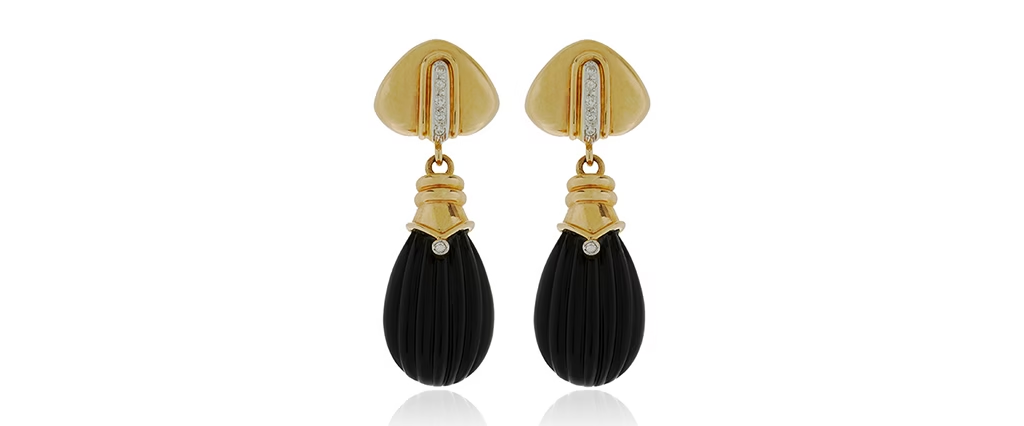
We are currently in the midst of celebrating a century of Art Deco influence. The geometric precision, architectural lines, and bold color contrasts of the 1920s remain the most popular era for estate jewelry. In 2026, expect to see a renewed focus on “white jewelry”—platinum and diamond combinations—alongside the bold use of emeralds, sapphires, and onyx that defined the roaring twenties.
1970s Bold Gold and Chunky Chains
The 1970s are having a major revival. This era’s jewelry is characterized by yellow gold, textured surfaces, and “chunky” silhouettes. As fashion moves toward more relaxed, bohemian styles, the 1970s gold aesthetic provides the perfect complement. Retailers are seeing a high turnover in heavy gold chains, textured bangles, and oversized rings that offer a “power dressing” vibe.
Conscious Luxury: The Sustainability Factor
Perhaps the most significant reason vintage jewelry will take over in 2026 is the rise of the “conscious consumer.” Gen Z and Millennial shoppers are increasingly wary of the environmental and ethical impacts of mining. Vintage jewelry is, by definition, the most sustainable choice in the industry.
Jennifer Gandia, co-owner of Greenwich St. Jewelers, describes this as “conscious luxury.” By purchasing an estate piece, a consumer is choosing a “storied piece, crafted to last, and already loved.” There is no new mining required, and the carbon footprint is virtually zero. This alignment with modern values is making estate jewelry the preferred choice for the eco-conscious luxury shopper.
Expert Perspectives: The Hunt for the Unique
The emotional connection to jewelry is stronger than ever. Designer Maya Brenner notes that shoppers are looking for ways to “tell their story” through personalized charms and classic styles like chokers. This desire for storytelling is what makes vintage so addictive.
Randi Molofsky, founder of the For Future Reference showroom, recently launched her own vintage brand to meet this demand. Her collection spans the Victorian, Edwardian, and Art Deco periods, and has quickly gained traction at prestigious retailers like Bergdorf Goodman and Bloomingdale’s.
Molofsky offers a piece of advice that has become a mantra for the 2026 jewelry hunter: “Nothing haunts you like the vintage you don’t buy.” Because many of these pieces are “unsigned one-offs,” the rarity adds a level of urgency to the shopping experience. In an era of mass production, the knowledge that you own the only piece of its kind in the world is the ultimate luxury.
Conclusion: A Future Built on the Past
As we look toward the remainder of 2026, the message is clear: the future of jewelry is rooted in the past. Whether it is a response to the “Taylor Swift effect,” a strategic move to bypass rising tariffs, or a sincere commitment to sustainable fashion, the public’s fascination with estate, antique, and vintage jewelry is only growing.
For retailers, this is a call to action to bolster their estate collections and educate their staff on the history of different eras. For consumers, it is an invitation to stop buying “disposable” jewelry and start investing in pieces that carry a legacy. In 2026, the most fashionable thing you can wear is a piece of history.