


In the high-stakes world of fine jewelry, tradition has long been the primary currency. For decades, the engagement ring industry was defined by “The Big Blue Box” or the sprawling, high-pressure atmosphere of Diamond District showrooms. However, by 2019, a fundamental shift was underway. As Gen Z and younger Millennials entered their prime engagement years, they found the legacy “beige and heteronormative” marketing of traditional brands increasingly out of touch.
Enter Frank Darling. Founded by husband-and-wife tech entrepreneurs Jeff Smith and Kegan Fisher, this New York-based upstart didn’t just join the market; it completely rewrote the engagement ring rulebook. By merging a “Warby Parker-style” digital experience with an intimate, living-room-vibe retail model, Frank Darling has transformed from a niche startup into a powerhouse seeing 100% year-over-year growth.
The Problem with Legacy Jewelry: Why “Beige” No Longer Works
Before Frank Darling launched, the online bridal jewelry landscape was dominated by e-tailers like Blue Nile and James Avery. While these brands offered scale, their customer experience felt frozen in time. Fisher, speaking from her Tribeca showroom, notes that you could often have a better digital experience buying a $20 toothbrush than a $20,000 diamond ring.
The legacy approach was flawed in three major areas:
- Marketing Focus: Campaigns were almost exclusively aimed at men, framing the purchase as a “surprise” transaction where the woman was a passive recipient.
- Aesthetic Branding: The visuals were often “beige” and strictly heteronormative, failing to resonate with a generation that values diversity, gender fluidity, and bold self-expression.
- User Experience: Websites were cluttered with technical data that felt more like a spreadsheet than a romantic journey.
Frank Darling saw this gap and asked a vital question: How does Gen Z actually shop for jewelry? The answer led them to build a brand that is inclusive, transparent, and—most importantly—woman-led.
The Innovation of the “Try-at-Home” Engagement Ring Kit
One of the boldest moves Frank Darling made early on was the introduction of the Try-at-Home kit. Recognizing that a diamond ring is a significant emotional and financial investment, they wanted to remove the “fear of the unknown.”
The kit allows prospective couples to select a handful of silver and cubic zirconia (CZ) replicas of Frank Darling’s core designs. These aren’t just flimsy mockups; they are meticulously crafted to mimic the weight and scale of the real thing. This allows customers to see how a 3-carat elongated cushion cut looks on their hand in different lighting, or how a 2.5mm band feels compared to a thinner 1.5mm wire.
Initially, the business was envisioned as purely online. However, the founders quickly learned that while the digital funnel was effective, customers were hungry for a physical connection. “Can I see it in person?” became the most common refrain. This led the team to start renting spaces by the hour to meet clients, eventually evolving into their current network of 12 luxury showrooms across major hubs like New York, Austin, Chicago, and San Francisco.
Why Women Are Leading the Bridal Revolution
Historically, the diamond industry banked on the “secret proposal” trope. Frank Darling flipped this narrative. Today, the journey is overwhelmingly female-led. According to recent industry data, over 66% of Gen Z women are actively involved in selecting their own rings.
From Platinum Solitaires to “Cool Swoopy Things”
When women take the lead, the design language changes. The safe, traditional choice—a platinum round solitaire—is no longer the default. Fisher has observed a massive migration toward yellow gold and sculptural, “swoopy” designs. Women aren’t looking for a status symbol dictated by a catalog; they are looking for a piece of wearable art that reflects their personal style.
The Rise of the “Multi-Ring” Lifestyle
One of the most radical shifts Frank Darling has observed is the concept of owning multiple engagement rings. In the past, the ring was a “forever” piece meant to be worn daily for 50 years. Now, thanks to the accessibility of lab-grown diamonds, consumers are treating engagement rings as part of a curated “stack.” A client might have a classic solitaire for daily wear and a “funky, going-out solitaire” or an intricate right-hand ring for special occasions.
The Lab-Grown Diamond Explosion: A $5,000 Sweet Spot
Perhaps the biggest disruptor in Frank Darling’s success has been the mainstreaming of lab-grown diamonds. Currently, approximately 75% of Frank Darling’s sales are lab-grown, with natural diamonds making up the remaining 25% (skewing higher in luxury markets like New York and L.A.).
Price and Carat Weight: The New Math
For many modern couples, the budget for an engagement ring hovers around the $5,000 mark. In the world of natural diamonds, $5,000 might buy a modest, high-quality 0.75 to 1-carat stone. In the lab-grown market, that same $5,000 can secure a breathtaking 2 to 4-carat diamond with exceptional clarity and color.
For Gen Z and Millennials, the choice is often a “no-brainer.” They prioritize the visual impact and the ethical story of a lab-grown stone over the traditional “rarity” of a mined diamond. Natural diamonds still command the $10,000 to $30,000+ price points for high-net-worth individuals, but the volume is clearly in the lab-grown sector.
2025 Jewelry Trends: Chunkier Bands and Antique Cuts
If you want to know what the next decade of engagement rings looks like, look no further than the customized requests hitting Frank Darling’s designers every day.
The Death of the Ultra-Thin Band
For years, the “whisper-thin” 1.5mm band was the gold standard. However, Frank Darling is seeing a definitive trend toward chunkier, more substantial bands. Styles now range from 2mm to 3.5mm, providing a more modern, architectural feel that offers better durability and a bolder aesthetic.
The Resurgence of Antique Cushions
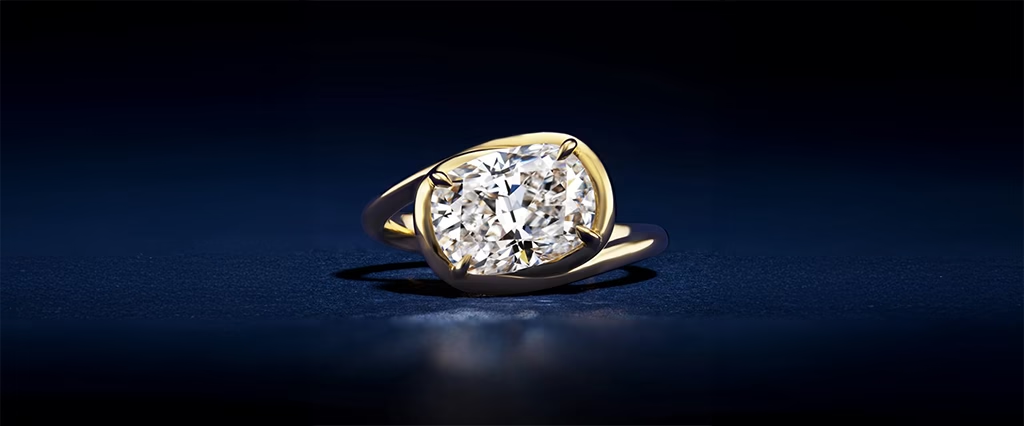
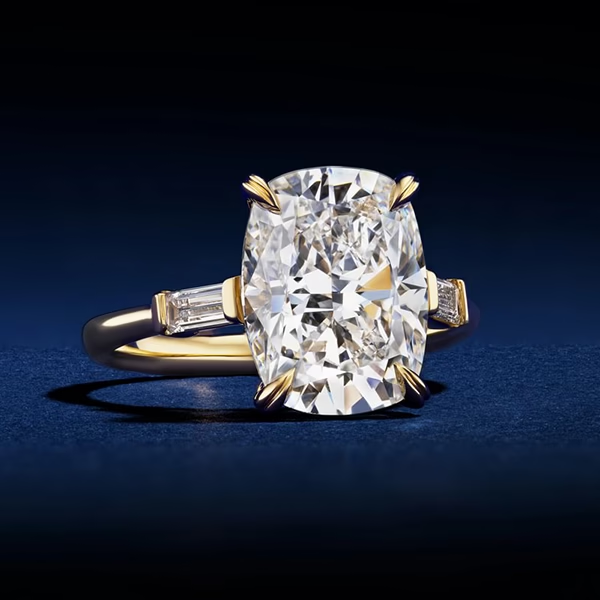
Influenced by celebrity engagements and a desire for vintage charm, antique cushion cuts and elongated cushions have become the “styles du jour.” These stones offer a softer, more romantic glow compared to the sharp, clinical brilliance of a modern round brilliant. The demand is so high that Fisher notes there are “literally not enough antique cushions to go around” to satisfy the current market appetite.
Customization: The Core of the Frank Darling Identity
While Frank Darling has a stunning core collection, 60% of their business is custom. This ranges from “semi-custom”—adding hidden birthstones, pavé detailing, or custom engravings to existing styles—to “ground-up custom” where customers bring in AI-generated images or hand-drawn sketches.
The AI Influence
In a fascinating intersection of tech and craft, more customers are using AI image generators to create “dream ring” concepts. Frank Darling’s design team then takes these digital dreams and translates them into 3D models and wax samples, ensuring the final piece is not only beautiful but structurally sound.
Omnichannel Excellence: The “Best Friend’s Living Room” Vibe
Frank Darling has mastered the “Omnichannel” approach. While 25% of their business occurs strictly online, a staggering 75% involves their showrooms. But these aren’t your typical jewelry stores.
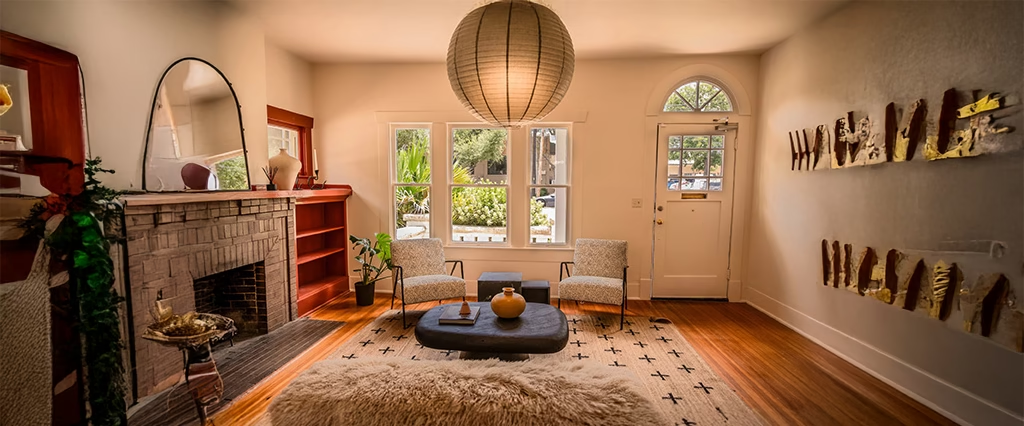
There are no intimidating glass cases that lock the jewelry away. Instead, the showrooms are designed to feel like a best friend’s living room. Customers make one-on-one appointments and work with a single designer throughout the entire process. This “anti-salesperson” approach builds trust and ensures that the emotional gravity of the purchase isn’t lost in a corporate transaction.
The Future of Frank Darling: NYC Manufacturing and Beyond
As they move into 2025, Frank Darling is not slowing down. The company is opening a massive 5,000-square-foot factory in New York City, allowing them to bring 80% of their production in-house. This vertical integration means faster turnaround times, even better quality control, and the ability to scale their “practically romantic” mission to a global audience.
By focusing on the woman’s perspective, embracing lab-grown technology, and refusing to settle for the “beige” status quo, Frank Darling hasn’t just sold rings—they’ve built a community of modern romantics who believe that an engagement ring should be as unique and multifaceted as the relationship it represents.
In the high-stakes world of fine jewelry, tradition has long been the primary currency. For decades, the engagement ring industry was defined by “The Big Blue Box” or the sprawling, high-pressure atmosphere of Diamond District showrooms. However, by 2019, a fundamental shift was underway. As Gen Z and younger Millennials entered their prime engagement years, they found the legacy “beige and heteronormative” marketing of traditional brands increasingly out of touch.
Enter Frank Darling. Founded by husband-and-wife tech entrepreneurs Jeff Smith and Kegan Fisher, this New York-based upstart didn’t just join the market; it completely rewrote the engagement ring rulebook. By merging a “Warby Parker-style” digital experience with an intimate, living-room-vibe retail model, Frank Darling has transformed from a niche startup into a powerhouse seeing 100% year-over-year growth.
The Problem with Legacy Jewelry: Why “Beige” No Longer Works
Before Frank Darling launched, the online bridal jewelry landscape was dominated by e-tailers like Blue Nile and James Avery. While these brands offered scale, their customer experience felt frozen in time. Fisher, speaking from her Tribeca showroom, notes that you could often have a better digital experience buying a $20 toothbrush than a $20,000 diamond ring.
The legacy approach was flawed in three major areas:
- Marketing Focus: Campaigns were almost exclusively aimed at men, framing the purchase as a “surprise” transaction where the woman was a passive recipient.
- Aesthetic Branding: The visuals were often “beige” and strictly heteronormative, failing to resonate with a generation that values diversity, gender fluidity, and bold self-expression.
- User Experience: Websites were cluttered with technical data that felt more like a spreadsheet than a romantic journey.
Frank Darling saw this gap and asked a vital question: How does Gen Z actually shop for jewelry? The answer led them to build a brand that is inclusive, transparent, and—most importantly—woman-led.
The Innovation of the “Try-at-Home” Engagement Ring Kit
One of the boldest moves Frank Darling made early on was the introduction of the Try-at-Home kit. Recognizing that a diamond ring is a significant emotional and financial investment, they wanted to remove the “fear of the unknown.”
The kit allows prospective couples to select a handful of silver and cubic zirconia (CZ) replicas of Frank Darling’s core designs. These aren’t just flimsy mockups; they are meticulously crafted to mimic the weight and scale of the real thing. This allows customers to see how a 3-carat elongated cushion cut looks on their hand in different lighting, or how a 2.5mm band feels compared to a thinner 1.5mm wire.
Initially, the business was envisioned as purely online. However, the founders quickly learned that while the digital funnel was effective, customers were hungry for a physical connection. “Can I see it in person?” became the most common refrain. This led the team to start renting spaces by the hour to meet clients, eventually evolving into their current network of 12 luxury showrooms across major hubs like New York, Austin, Chicago, and San Francisco.
Why Women Are Leading the Bridal Revolution
Historically, the diamond industry banked on the “secret proposal” trope. Frank Darling flipped this narrative. Today, the journey is overwhelmingly female-led. According to recent industry data, over 66% of Gen Z women are actively involved in selecting their own rings.
From Platinum Solitaires to “Cool Swoopy Things”
When women take the lead, the design language changes. The safe, traditional choice—a platinum round solitaire—is no longer the default. Fisher has observed a massive migration toward yellow gold and sculptural, “swoopy” designs. Women aren’t looking for a status symbol dictated by a catalog; they are looking for a piece of wearable art that reflects their personal style.
The Rise of the “Multi-Ring” Lifestyle
One of the most radical shifts Frank Darling has observed is the concept of owning multiple engagement rings. In the past, the ring was a “forever” piece meant to be worn daily for 50 years. Now, thanks to the accessibility of lab-grown diamonds, consumers are treating engagement rings as part of a curated “stack.” A client might have a classic solitaire for daily wear and a “funky, going-out solitaire” or an intricate right-hand ring for special occasions.
The Lab-Grown Diamond Explosion: A $5,000 Sweet Spot
Perhaps the biggest disruptor in Frank Darling’s success has been the mainstreaming of lab-grown diamonds. Currently, approximately 75% of Frank Darling’s sales are lab-grown, with natural diamonds making up the remaining 25% (skewing higher in luxury markets like New York and L.A.).
Price and Carat Weight: The New Math
For many modern couples, the budget for an engagement ring hovers around the $5,000 mark. In the world of natural diamonds, $5,000 might buy a modest, high-quality 0.75 to 1-carat stone. In the lab-grown market, that same $5,000 can secure a breathtaking 2 to 4-carat diamond with exceptional clarity and color.
For Gen Z and Millennials, the choice is often a “no-brainer.” They prioritize the visual impact and the ethical story of a lab-grown stone over the traditional “rarity” of a mined diamond. Natural diamonds still command the $10,000 to $30,000+ price points for high-net-worth individuals, but the volume is clearly in the lab-grown sector.
2025 Jewelry Trends: Chunkier Bands and Antique Cuts
If you want to know what the next decade of engagement rings looks like, look no further than the customized requests hitting Frank Darling’s designers every day.
The Death of the Ultra-Thin Band
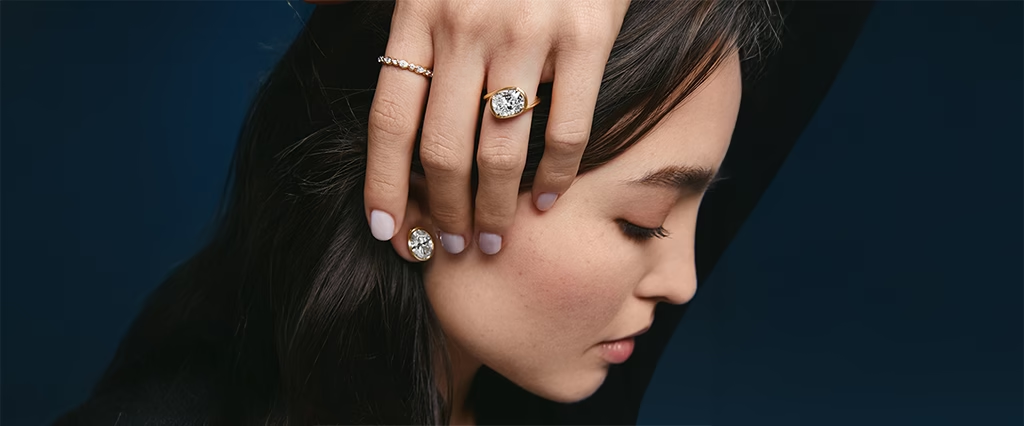
For years, the “whisper-thin” 1.5mm band was the gold standard. However, Frank Darling is seeing a definitive trend toward chunkier, more substantial bands. Styles now range from 2mm to 3.5mm, providing a more modern, architectural feel that offers better durability and a bolder aesthetic.
The Resurgence of Antique Cushions
Influenced by celebrity engagements and a desire for vintage charm, antique cushion cuts and elongated cushions have become the “styles du jour.” These stones offer a softer, more romantic glow compared to the sharp, clinical brilliance of a modern round brilliant. The demand is so high that Fisher notes there are “literally not enough antique cushions to go around” to satisfy the current market appetite.
Customization: The Core of the Frank Darling Identity
While Frank Darling has a stunning core collection, 60% of their business is custom. This ranges from “semi-custom”—adding hidden birthstones, pavé detailing, or custom engravings to existing styles—to “ground-up custom” where customers bring in AI-generated images or hand-drawn sketches.
The AI Influence
In a fascinating intersection of tech and craft, more customers are using AI image generators to create “dream ring” concepts. Frank Darling’s design team then takes these digital dreams and translates them into 3D models and wax samples, ensuring the final piece is not only beautiful but structurally sound.
Omnichannel Excellence: The “Best Friend’s Living Room” Vibe
Frank Darling has mastered the “Omnichannel” approach. While 25% of their business occurs strictly online, a staggering 75% involves their showrooms. But these aren’t your typical jewelry stores.
There are no intimidating glass cases that lock the jewelry away. Instead, the showrooms are designed to feel like a best friend’s living room. Customers make one-on-one appointments and work with a single designer throughout the entire process. This “anti-salesperson” approach builds trust and ensures that the emotional gravity of the purchase isn’t lost in a corporate transaction.
The Future of Frank Darling: NYC Manufacturing and Beyond
As they move into 2025, Frank Darling is not slowing down. The company is opening a massive 5,000-square-foot factory in New York City, allowing them to bring 80% of their production in-house. This vertical integration means faster turnaround times, even better quality control, and the ability to scale their “practically romantic” mission to a global audience.
By focusing on the woman’s perspective, embracing lab-grown technology, and refusing to settle for the “beige” status quo, Frank Darling hasn’t just sold rings—they’ve built a community of modern romantics who believe that an engagement ring should be as unique and multifaceted as the relationship it represents.