

A Year of Radiance: The Definitive Jewelry Trends That Shaped 2025
As we stand at the threshold of a new year, looking back at the jewelry landscape of 2025 feels like peering through a kaleidoscope of shifting economic realities, cultural milestones, and a renewed appreciation for the earth’s rawest offerings. In the world of fine jewelry, trends are rarely lightning strikes that disappear as quickly as they arrive. Instead, our industry moves with a deliberate, graceful pace. Styles do not simply vanish; they evolve, allowing consumers the time to truly absorb, live with, and eventually treasure specific aesthetics.
However, 2025 was unique. It was a year where the “slow burn” of jewelry fashion met a series of high-impact global catalysts. From the soaring heights of the gold market to the “butterfly effect” of pop-culture icons, 2025 carved out a distinct identity in the history of ornamentation. It was a year that prioritized texture over sheer brilliance, personality over uniformity, and a sophisticated, earthy palette that grounded us in uncertain times.

The Economic Pivot: The Great Silver Renaissance and the Chunky Aesthetic
One cannot discuss the jewelry trends of 2025 without addressing the “elephant in the room”—the record-breaking price of gold. As gold surged to historic highs and new trade tariffs reshaped the global supply chain, the industry underwent a strategic and stylistic pivot. This economic pressure birthed one of the most visible trends of the year: the elevation of chunky sterling silver.
In 2025, silver shed its reputation as gold’s “affordable sibling” and reclaimed its status as a high-fashion powerhouse. Designers embraced the malleability and scale that silver allows, resulting in “statement” pieces that would have been prohibitively expensive in 18k gold. We saw a surge in bold, sculptural cuffs, oversized drop earrings reminiscent of the 1980s, and heavy, industrial-chic links. This trend wasn’t just about saving money; it was a stylistic choice that favored a cool, monochromatic look which felt modern, edgy, and decidedly “non-traditional.” The “silver rush” of 2025 proved that luxury is defined by design and craftsmanship, not just the metal’s spot price.
The Rise of the Opaque: A Tactile Revolution in Gemstones
For decades, the “Big Three” (rubies, sapphires, and emeralds) and diamonds held an undisputed monopoly on the luxury market. But 2025 saw a dramatic shift toward opaque and translucent gemstones. This year, consumers were less interested in “fire” and more interested in “feeling.” There was a collective yearning for stones that felt ancient, talismanic, and connected to the natural world.
The Jade Renaissance
Perhaps the most significant “re-discovery” of the year was Jade. While always revered in Eastern cultures, 2025 saw Jade explode onto the global stage in contemporary, Western-influenced designs. We saw jadeite and nephrite being used in unexpected ways—carved into geometric shapes, paired with blackened gold, or set alongside colorless diamonds for a sharp contrast. It became the “it-stone” for those seeking a blend of heritage and modern minimalism.
The Beauty of Earthy Textures: Malachite, Lapis, and Labradorite
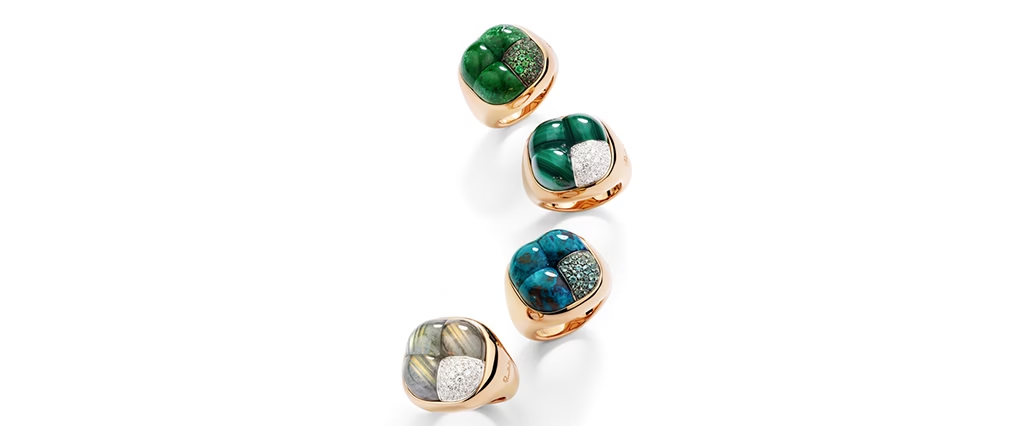
Beyond jade, the year was defined by stones like carnelian, labradorite, malachite, and lapis lazuli. High-jewelry houses led the charge, with Pomellato’s modern reimagining of its Mora and Mosaico lines serving as a prime example. These collections utilized the rich, swirling greens of malachite and the deep, celestial blues of lapis to create pieces that felt like wearable art. These stones offer a sense of “grounding” that faceted stones sometimes lack, providing a rich, matte texture that complements the tactile fashion trends we saw on the runways this year.
The Mocha Mousse Era: Why Brown Became the Color of Luxury
If 2024 was about vibrant “dopamine dressing,” 2025 was the year of “Sophisticated Earth.” Pantone’s selection of Mocha Mousse as the Color of the Year for 2025 acted as a massive catalyst for the jewelry industry. It confirmed a trend that had been bubbling under the surface: the return of brown gemstones.
Initially, the idea of “brown jewelry” might have sounded uninspiring, but 2025 proved just how luxurious and warm this palette could be. Brown felt refreshing because it was unexpected. It offered a “neutral” alternative that felt richer than clear diamonds and softer than black onyx.
The Phenomenon of the Brown Diamond
The true star of 2025 was, without a doubt, the brown diamond. Long relegated to industrial use or marketed under the “chocolate” or “champagne” labels of the early 2000s, brown diamonds underwent a complete brand transformation this year. Much of this can be attributed to De Beers’ “Desert Diamonds” campaign, which highlighted the unique, sun-drenched beauty of natural brown stones.
The impact was immediate. According to industry reports and Pinterest trend data, Gen Z consumers—who value individuality and sustainability—began searching for brown diamond engagement rings at unprecedented rates. These stones offer a unique story and a “moody” aesthetic that resonates with a generation looking to break away from traditional bridal norms. As we move toward 2026, the momentum of the brown diamond shows no signs of slowing down; it is no longer a niche choice but a prestigious staple.
Tiger’s Eye and Smoky Quartz
The “Mocha Mousse” trend also revitalized interest in more accessible stones like tiger’s eye and smoky quartz. The chatoyancy of tiger’s eye provided a sense of movement and mystery to 2025 collections, appearing in everything from high-end men’s signet rings to delicate female pendants. These stones perfectly captured the “quiet luxury” vibe—expensive-looking, understated, and incredibly versatile.
Pop Culture’s Golden Touch: The “Taylor Swift Effect” and the Power of Orange
The influence of celebrity culture on jewelry has always been significant, but in 2025, it reached a fever pitch. One of the most specific and fascinating trends of the year was the sudden obsession with orange gemstones, specifically carnelian and fire opal.
Fashion historians will point to the “Taylor Swift Effect” as a primary driver. As the global icon embraced warm, autumnal tones and orange-hued jewelry during her record-breaking public appearances and tour legs, the world followed suit. Taylor taught the consumer base to love orange again. What was once considered a “difficult” color to wear became a symbol of energy and creativity. Carnelian, with its rich, burnt-orange glow, became the must-have stone for fans and fashionistas alike, appearing in layered necklaces and “friendship-style” fine jewelry that bridged the gap between memorabilia and luxury.

More is More: The Return of Maximalism and the “Neckmess”
After years of minimalist “stacking” (thin bands and delicate chains), 2025 saw a return to the “More is More” philosophy. Maximalism made a triumphant comeback, but with a refined, curated edge. It wasn’t about wearing everything you owned; it was about the art of the layer.
The Long Necklace and Early Aughts Revival
We witnessed a significant comeback of the long necklace—pendant styles that hit mid-torso, reminiscent of the early 2000s bohemian aesthetic. These were often layered with multiple strands of varying weights and textures, a look the internet affectionately dubbed the “neckmess.” This trend allowed individuals to mix old with new, family heirlooms with modern purchases, creating a deeply personal narrative through their jewelry.
The Auditory Charm of the Bangle Stack
Wristwear also took a turn for the bold. The “jingle” of a bangle stack became the soundtrack of 2025. Whether it was a collection of mismatched vintage gold bangles or a curated set of sleek, modern cuffs, “piling it on” was the name of the game. This trend tapped into a sense of playfulness and self-expression that had been missing from the jewelry world for several seasons. It encouraged consumers to become their own stylists, mixing metals (yes, silver and gold together!) and textures with abandon.
Final Reflections: Will These Trends Endure into 2026?
As we look toward the horizon of 2026, the question remains: which of these trends will stay and which will fade?
The shift toward silver and opaque gemstones feels like a fundamental change in the consumer’s palate—a move toward “alternative luxury” that is likely to persist as long as economic volatility and a desire for individuality remain. The brown diamond, having finally secured its place in the high-jewelry pantheon, is poised to become a classic rather than a passing fad.
The jewelry of 2025 was defined by a balance of earthy groundedness and exuberant maximalism. It was a year that reminded us that jewelry is more than just an investment or a status symbol; it is a reflection of the times we live in, the icons we admire, and the personal stories we choose to tell the world. Whether you spent the year stacking silver bangles or hunting for the perfect “Desert Diamond,” 2025 provided a rich, textured canvas for every jewelry lover to find their sparkle.