


The Dawn of a New Era at the Roman Maison: Laura Burdese to Lead Bulgari into the Future
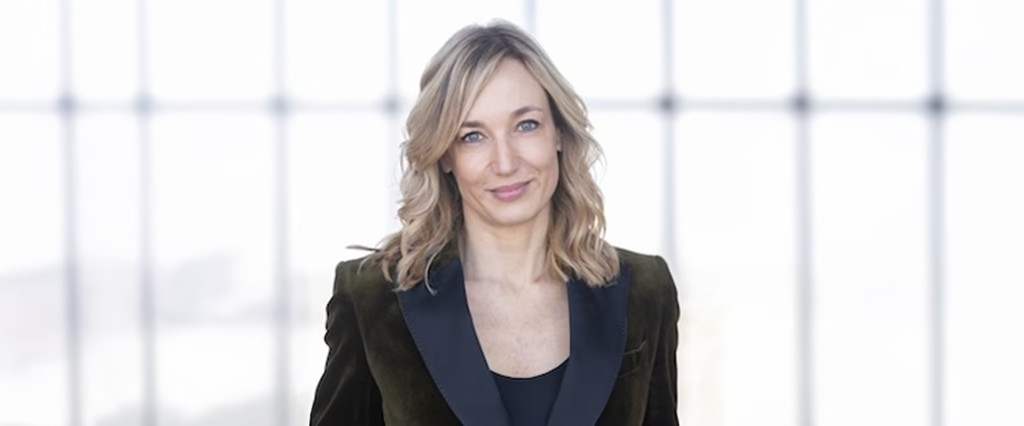
The luxury landscape is witnessing a historic transition at one of its most storied institutions. In a strategic move that signals both continuity and evolution, LVMH Moët Hennessy Louis Vuitton has officially announced that Laura Burdese, the current Deputy CEO of Bulgari, will ascend to the position of Chief Executive Officer, effective July 1, 2026. This leadership change marks the end of a transformative twelve-year tenure under Jean-Christophe Babin and the beginning of a new chapter for the “Magnificent Roman Jeweler.”
The announcement, delivered by the French luxury conglomerate LVMH, underscores a meticulously planned succession strategy designed to maintain Bulgari’s upward trajectory in the hyper-competitive global high-jewelry and watch markets. As the industry looks toward the late 2020s, Burdese’s appointment is seen as a clear signal that the brand will continue to prioritize brand storytelling, feminine elegance, and Roman heritage while navigating a complex global economy.
A Seamless Succession: Laura Burdese’s Strategic Ascent
Laura Burdese is no stranger to the intricate workings of the LVMH empire or the specific DNA of Bulgari. Her journey to the top job has been characterized by a series of high-impact roles that have prepared her for the complexities of leading a multi-billion-euro maison.
In July 2024, Burdese was named Deputy CEO of Bulgari, a move that many industry insiders correctly interpreted as a “test flight” for the top position. Prior to that, she served for two years as the brand’s Chief Marketing Officer (CMO), where she was instrumental in refining Bulgari’s visual identity and deepening its connection with a younger, digitally native luxury consumer.
Before joining the Roman house, Burdese spent five years as the CEO of Acqua di Parma, another jewel in the LVMH crown. During her time there, she was credited with modernizing the historic perfume house, expanding its lifestyle offerings, and reinforcing its Italian soul. Her career also includes significant stints at the Swatch Group, where she held leadership roles for brands like Calvin Klein and Omega. This diverse background—spanning watches, fragrances, and high jewelry—gives her a 360-degree view of the luxury sector that few executives can match.
The Marketing Visionary Turned Global Leader
What sets Laura Burdese apart is her ability to blend rigorous operational management with a visionary approach to marketing. At a time when luxury brands must move beyond mere products to sell “experiences” and “identities,” Burdese’s expertise is invaluable. Under her guidance as CMO, Bulgari’s campaigns became more cinematic, emphasizing the brand’s deep roots in the Eternal City while celebrating modern icons of cinema and fashion.
Her promotion to CEO suggests that LVMH intends to double down on Bulgari’s brand equity. As the “Queen of Marketing” takes the helm, the industry expects to see a continued emphasis on high-profile brand ambassadors, immersive retail experiences, and a digital strategy that complements the artisanal excellence of the jewelry workshops in Valenza and the watchmaking ateliers in Switzerland.
The Babin Era: A Decade of Roman Renaissance
To understand the weight of Burdese’s new role, one must look at the legacy left by her predecessor, Jean-Christophe Babin. For the last 12 years, Babin has been the driving force behind Bulgari’s meteoric rise. A veteran of the watch industry, Babin arrived at Bulgari after a successful stint as the President and CEO of TAG Heuer.
When Babin took over in 2013, Bulgari was already a respected name, but it was under his leadership that the brand truly asserted its dominance as a “global powerhouse.” He oversaw the expansion of the iconic Serpenti collection, turning it into a global symbol of empowerment and luxury. Perhaps even more impressively, he steered the brand to become a serious contender in the world of haute horlogerie.
From Watches to High Jewelry: Babin’s Strategic Mastery
Under Babin’s watch, the Octo Finissimo collection was born, shattering multiple world records for thinness and establishing Bulgari as a pioneer in technical watchmaking. He managed to do what many thought impossible: convince the world that a Roman jeweler could outperform centuries-old Swiss watchmakers in their own backyard.
Beyond the products, Babin expanded Bulgari’s footprint in the hospitality sector and elevated its high-jewelry offerings to compete with the likes of Cartier and Van Cleef & Arpels. His era was defined by bold risks, rapid expansion into the Chinese market, and a relentless focus on the “Roman-ness” of the brand—a strategy that paid off handsomely as Bulgari became one of the most profitable entities within LVMH’s Watch and Jewelry division.
A New Dual-Leadership Dynamic: Babin’s Continued Influence
The transition announced by LVMH is far from a departure for Jean-Christophe Babin. Instead, it is a redistribution of power that allows LVMH to leverage his expertise across multiple platforms. While Burdese will handle the day-to-day operations and strategic growth of the jewelry and watch business as CEO, Babin will remain a central figure in the Bulgari universe.
Starting July 1, 2026, Babin will transition into the role of Chairman of Bulgari’s Board. Furthermore, he will retain his position as the CEO of the Bulgari Hotel unit, a crucial segment of the brand’s lifestyle ecosystem that continues to open ultra-luxury properties in cities like Tokyo, Rome, and Los Angeles. He will also continue to lead the Bulgari Foundation, focusing on the brand’s philanthropic and cultural preservation efforts.
Adding to his heavy portfolio, Babin was named the head of LVMH’s watch division in March 2025. This means he will oversee not just the horological output of Bulgari, but also brands like TAG Heuer, Hublot, and Zenith. An LVMH spokesperson clarified that while the CEO transition at Bulgari is a major milestone, “there are no other changes to the rest of Jean-Christophe Babin’s responsibilities.”
LVMH’s Grand Strategy: The Watch and Jewelry Powerhouse
The leadership shuffle at Bulgari is part of a broader organizational shift directed by Stéphane Bianchi, the head of LVMH’s Watch and Jewelry division. Since his appointment in 2021, Bianchi has been tasked with narrowing the gap between LVMH and its primary rival, Richemont (the owner of Cartier).
Both Burdese and Babin will report directly to Bianchi. This structure ensures that while Bulgari has a fresh leader in Burdese, it remains anchored by the experience of Babin and the strategic oversight of Bianchi. By promoting from within, LVMH is following its proven playbook: rewarding performance and maintaining brand DNA while bringing in fresh perspectives to tackle new market challenges.
Why This Transition Matters: The Future of High Luxury
The timing of this change—announced in late 2025 for a mid-2026 implementation—reflects the long-term thinking that characterizes the Arnault family’s management of LVMH. The luxury market is currently in a state of flux. While demand for entry-level luxury has cooled, the “VIC” (Very Important Client) segment for high jewelry and rare watches remains robust.
By placing a marketing and brand specialist like Laura Burdese at the helm, LVMH is signaling that the next phase of growth will come from brand elevation and deepening customer loyalty. As Tiffany & Co. (also owned by LVMH) continues its American-led global expansion, Bulgari’s role is to remain the “Italian alternative”—flamboyant, colorful, and deeply rooted in Mediterranean culture.
What to Expect Under Laura Burdese’s Leadership
As we look toward July 2026, the industry is keen to see how Burdese will leave her mark. We can expect a few key themes to emerge:
- Elevated Femininity: Given her background and her role in the Serpenti campaigns, Burdese is likely to further emphasize jewelry collections that speak to the modern woman’s lifestyle.
- Sustainability and Traceability: As a younger leader, she is expected to push Bulgari further into sustainable sourcing and ethical craftsmanship, areas that are increasingly important to Gen Z and Millennial luxury buyers.
- Digital Innovation: Having served as CMO, Burdese will likely integrate cutting-edge technology—from AI-driven personalization to blockchain-based authenticity—into the Bulgari shopping experience.
- The “Roman Way of Life”: Expect a tighter integration between the jewelry business and the hotel division, creating a seamless lifestyle brand where clients don’t just wear Bulgari, but live it.
In conclusion, the elevation of Laura Burdese is more than just a corporate promotion; it is a carefully choreographed evolution of one of the world’s most iconic brands. While Jean-Christophe Babin built the modern fortress that is Bulgari, Laura Burdese is being handed the keys to ensure that this fortress remains the most vibrant and alluring destination in the world of luxury for decades to come. The “Magnificent Roman Jeweler” is in safe, visionary hands.