


MadaLuxe Group Acquires Majority Stake in Ippolita: A New Era for Sculptural Fine Jewelry
The luxury landscape witnessed a seismic shift this December as the MadaLuxe Group, a titan in luxury distribution and brand investment, officially announced its acquisition of a majority stake in Ippolita. This high-profile deal marks a significant milestone for the New York-based fine jewelry house, known globally for its fusion of Italian artistry and contemporary American fashion. While the financial specifics of the transaction remain confidential, the implications for the jewelry industry are loud and clear: artisanal, artist-led luxury is more valuable than ever in the 2025 market.
A Strategic Union in the Luxury Sphere
The acquisition of Ippolita by MadaLuxe Group is not merely a financial transaction; it is a strategic marriage between creative brilliance and operational muscle. MadaLuxe Group, headquartered in Southern California, has long been recognized as North America’s premier distributor of high-end fashion, accessories, and timepieces. By bringing Ippolita into its fold, MadaLuxe is signaling a bold expansion into the fine jewelry sector, a category that has shown remarkable resilience and growth even as other luxury segments face headwinds.
Adam Freede, the CEO and co-founder of MadaLuxe Group, expressed immense enthusiasm about the partnership, noting that Ippolita possesses a “timeless visual vocabulary” and an “extraordinary customer loyalty” that is rare in the crowded jewelry market. For MadaLuxe, Ippolita represents the perfect flagship brand to anchor its jewelry portfolio—a brand with a proven track record, a distinct identity, and significant room for international scaling.
The Visionary Behind the Brand: Ippolita Rostagno’s Artistic Journey
At the heart of the brand is its founder, Ippolita Rostagno. Born in Florence, Italy, to an American artist mother and an Italian intellectual father, Rostagno was immersed in the world of Renaissance art and artisanal craftsmanship from birth. However, her path to becoming a world-renowned jeweler was anything but linear. After studying sculpture and ceramics at the Istituto d’Arte in Florence, she moved to New York City in the 1990s, where she initially channeled her creativity into various artistic mediums before finding her true calling in gold and gemstones.
From Florence to New York: The Birth of “Cool Fine Jewelry”
In 1999, Rostagno identified a significant void in the jewelry market. At the time, fine jewelry was largely divided into two categories: traditional, often stuffy “heirloom” pieces intended for special occasions, or costume jewelry that lacked lasting value. Rostagno sought to create something entirely different—”cool fine jewelry” designed to be worn every day, layered, and enjoyed without the need for a black-tie event.
She launched her eponymous brand at Bergdorf Goodman, and her designs were an immediate sensation. By treating gold not just as a precious metal but as a medium for sculpture, she created pieces that felt organic, intimate, and inherently feminine. Her philosophy was simple yet revolutionary: jewelry should celebrate the woman wearing it, not just the stones it holds.
Signature Aesthetics: Sculptural Metal and Lollipop Gemstones
What makes Ippolita instantly recognizable is its unique “sculptural” aesthetic. Rostagno famously uses a technique called “body imprinting,” where she takes sheets of wax and presses them against her own body to create undulated, organic textures. These shapes are then cast in 18-karat gold or sterling silver, resulting in the brand’s signature hand-hammered look.
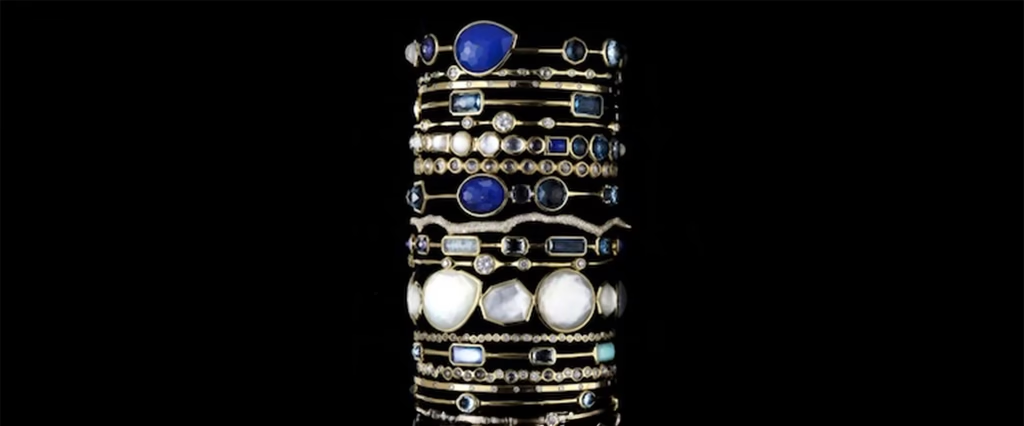
The “Lollipop” collection, perhaps the brand’s most iconic line, showcases Rostagno’s masterful use of color. Using proprietary cutting techniques, she creates oversized, vibrant gemstones—amethyst, blue topaz, mother-of-pearl, and turquoise—that appear to float within thin strips of metal. These pieces are designed to catch the light from every angle, embodying the “casual luxury” that has become the brand’s hallmark.
The Changing Tide of Ownership: Resilience and Reacquisition
The story of Ippolita is also a story of business resilience. This acquisition by MadaLuxe marks at least the third major shift in the company’s ownership structure. In 2007, as the brand was experiencing rapid domestic growth, the private equity firm Castanea Partners purchased a majority stake. This partnership helped institutionalize the brand and expand its footprint in high-end department stores like Neiman Marcus and Saks Fifth Avenue.
The Castanea Era and the 2018 Buyback
However, the journey of an artist-led brand within a private equity framework can be complex. In 2018, in a move that surprised and inspired the industry, Ippolita Rostagno bought back her brand. This reacquisition allowed her to regain full creative and strategic control, refocusing the company on its artisanal roots and direct-to-consumer (DTC) channels. Under her renewed leadership, the brand expanded its retail presence, opening stunning flagships in Milan, Chicago, and New York’s Madison Avenue.
The decision to now partner with MadaLuxe Group appears to be a calculated move to secure the brand’s global future. Unlike traditional private equity, MadaLuxe operates with a “brand house” mentality, offering the infrastructure of a global distributor while respecting the creative autonomy of the founder. Rostagno will remain as the Chief Creative Officer, ensuring that the brand’s artistic soul remains untarnished as it enters this new chapter of expansion.
Why MadaLuxe Group is the Ideal Partner
MadaLuxe Group brings a unique set of capabilities to the table that few other investors could offer. As a company that has built its reputation on managing the North American presence of iconic European Maisons, MadaLuxe understands the nuances of luxury storytelling.
Expanding Beyond Timepieces and Spirits
While Ippolita is MadaLuxe’s first major acquisition in the fine jewelry space, the group is no stranger to the “hard luxury” sector. Its subsidiary, MadaLuxe Timepieces, is the official distributor and warranty holder for Swiss-made watch brands such as Versace, Ferragamo, and Philipp Plein. This expertise in high-end manufacturing and global logistics provides Ippolita with a ready-made platform for international growth.
Beyond watches, MadaLuxe has diversified its portfolio into lifestyle categories, including footwear, accessories, and even spirits with its investment in the ultra-premium Tequila Enemigo. This holistic approach to luxury lifestyle branding means that Ippolita can benefit from cross-category insights and a vast network of global retail partners.
The Future of Ippolita: Global Expansion and the Evolution of Retail
With MadaLuxe’s backing, the future of Ippolita looks increasingly international. While the brand has a dominant presence in the United States, there is significant untapped potential in European and Asian markets. MadaLuxe’s robust luxury infrastructure is expected to accelerate the opening of new boutiques and the enhancement of the brand’s e-commerce capabilities.
Flagship Innovation: The “Wunderkammer” Concept
A key part of the brand’s future strategy involves its innovative retail concept. The Madison Avenue flagship, which opened recently, serves as a “Wunderkammer” or “cabinet of curiosities.” The store is designed not just to sell jewelry but to immerse the customer in Rostagno’s world. It features a curated gallery of her personal art collection, glass sculptures, and found objects.
This “museum-like” retail experience is likely to be replicated in key global fashion capitals. By removing the traditional glass barriers found in many jewelry stores, Ippolita encourages customers to touch, feel, and interact with the pieces—a “direct-to-hand” philosophy that aligns with the modern consumer’s desire for authenticity and engagement.
Market Context: Why Luxury Jewelry is Winning in 2025
The acquisition comes at a time when the jewelry market is outperforming almost every other luxury category. According to recent industry reports, while sales of high-end handbags and seasonal apparel have slowed due to “logo fatigue” and aggressive price hikes, fine jewelry has seen a 10% year-over-year increase in spending.
Today’s luxury consumer is increasingly looking for “investment pieces”—items that hold their value both emotionally and financially. Ippolita’s commitment to using 100% recycled gold and ethically sourced gemstones also appeals to the burgeoning Gen Z and Millennial luxury demographic, for whom sustainability is a non-negotiable requirement.
Conclusion
The acquisition of Ippolita by MadaLuxe Group represents a powerful vote of confidence in the enduring appeal of artist-led luxury. By combining Ippolita Rostagno’s unparalleled creative vision with MadaLuxe’s global operational expertise, the partnership is poised to redefine the “accessible fine jewelry” category. As the brand embarks on its journey toward becoming a truly global powerhouse, one thing remains certain: the sculptural, colorful, and “eminently wearable” spirit of Ippolita will continue to celebrate the individuality of women for generations to come.