


Gen Z is Rewriting the Rules of the Luxury Watch Market: A 2025 Industry Shift
The luxury watch industry, long considered a bastion of tradition and slow-moving trends, is undergoing a seismic shift. The architect of this transformation? Generation Z. Born between 1997 and 2012, this demographic is not just entering the market; they are actively reshaping it in their own image.
According to the H1 2025 report released by the leading watch resale marketplace Chrono24 and the online watch media platform Fratello, the purchasing habits of Gen Z are diverging sharply from those of Millennials and Gen X. No longer content to follow the beaten path of steel sports watches, these young collectors are championing elegance, individuality, and heritage.
This article delves deep into the data, exploring how Gen Z is fueling a dress watch renaissance, why Cartier has become their brand of choice, and how industry giant Rolex is weathering this new storm of consumer preference.
The Dress Watch Renaissance: A Shift from Steel to Sophistication
For the better part of a decade, the luxury watch narrative was dominated by one category: the integrated bracelet steel sports watch. It was an era defined by the “hype” watch—think the Rolex Daytona, the Patek Philippe Nautilus, and the Audemars Piguet Royal Oak. These rugged, versatile timepieces were the ultimate status symbols, commanding waitlists measured in years and resale prices that defied gravity.
However, the H1 2025 report reveals a stark pivot. Gen Z is turning the page on the sports watch monopoly, ushering in a new era of refined elegance.
Breaking the Sport Watch Monopoly
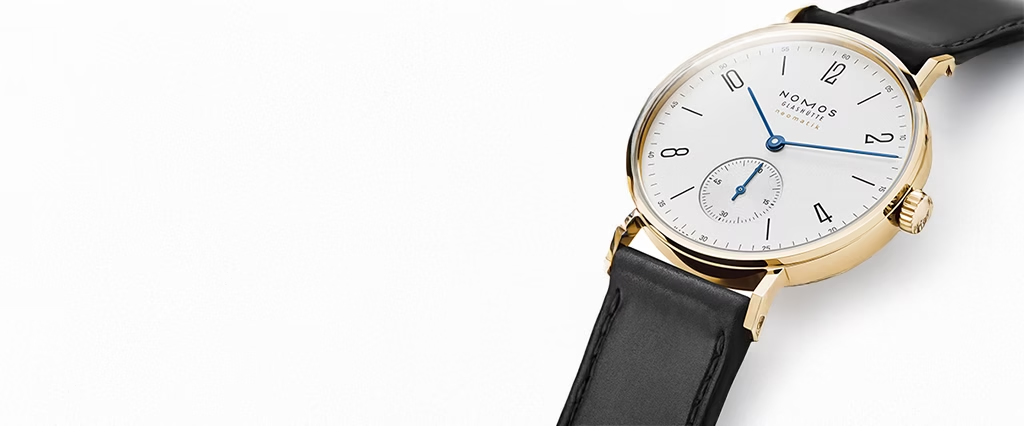
Dress watches—traditionally defined by their slender profiles, precious metal cases, and leather straps—were once dismissed by younger buyers as “grandfather’s watches.” Today, they are the hottest commodity for the youth market.
Driven by a desire for unique self-expression and “adornment,” Gen Z views watches less as functional tools and more as extensions of personal style. The report highlights a staggering statistic: dress watch purchases by Gen Z have surged by 44% since 2018. To put that in perspective, other age groups only saw a 29% increase in the same category.
Currently, dress watches account for 12% of all watches purchased by Gen Z, the highest market share for this category among any age demographic. This isn’t just a blip; it’s a cultural correction. The “flex” has shifted from wearing the same steel diver as everyone else to discovering a vintage gold piece that no one else has.

The “Barbell” Economy of Watch Collecting
One of the most fascinating insights from the 2025 report is the economic polarization of these purchases, often referred to as a “barbell” distribution. Gen Z’s spending power is vast but varied, leading to high demand at the extreme ends of the price spectrum.
- The Entry-Level Enthusiast: Approximately 22.4% of Gen Z buyers are hunting for dress watches priced below €2,000 (approx. $2,322). This price point allows younger collectors to enter the luxury space through vintage markets, picking up smaller brands or gold-plated classics that offer high style without the five-figure price tag.
- The High-End Investor: On the other end, 21.5% of buyers—likely the older or more affluent segment of the cohort—are transacting at levels above €10,000. These buyers are targeting investment-grade pieces from top-tier manufactures.
- The report concludes with a telling observation: “Affordable and very expensive dress watches are in high demand, not much in between.” The mid-market for dress watches remains tepid, squeezed by the hunt for value on one side and the desire for exclusivity on the other.
Cartier: The New King of Cool for Gen Z
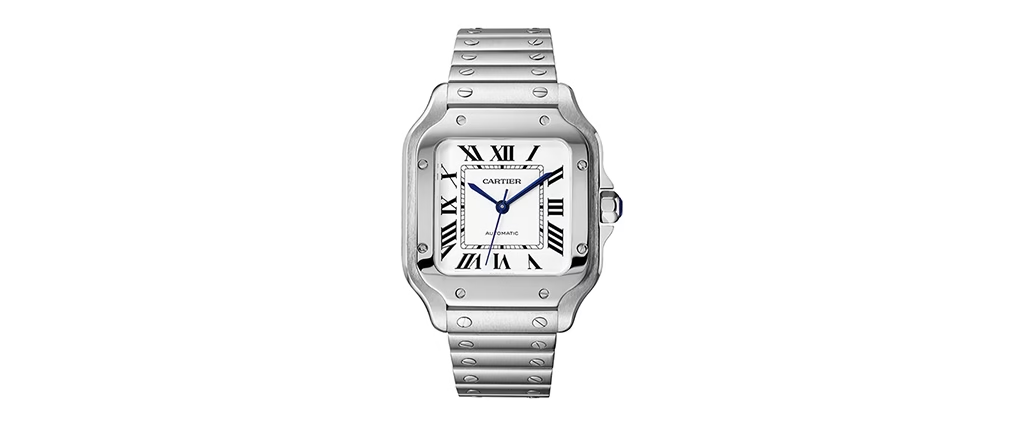
If there is one brand that encapsulates Gen Z’s impact on the watch world, it is Cartier. The “Jeweler of Kings” has effectively dethroned traditional sports watch heavyweights in the hearts of young collectors.
From “Old Money” to Viral Sensation
The data surrounding Cartier’s rise is nothing short of explosive. Over the past seven years, Cartier’s share of Gen Z’s total watch purchases has quadrupled, rocketing from 1.7% to 6.8%.
This growth rate is unprecedented. When looking at the overall market (all generations combined), Cartier’s share grew from 2.9% to 4.8%. While this is healthy growth, it pales in comparison to the brand’s viral adoption by Gen Z. The younger generation isn’t just buying Cartier; they are championing it at a rate far outpacing their parents.
Iconic Shapes and the “Instagram Factor”
Why Cartier? The answer lies in the intersection of design heritage and digital culture. Gen Z is a visual generation, and Cartier’s mastery of shape—from the rectangular Tank to the square Santos and the amorphous Crash—plays perfectly on visual-first platforms like Instagram and TikTok.
- The Vintage Appeal: Cartier’s vast archive offers endless opportunities for “treasure hunting.” A vintage Tank Must or a Santos Galbée offers immediate recognition and “cool factor” for a fraction of the price of a modern sports watch.
- Gender Fluidity: Unlike the aggressively masculine aesthetic of oversized dive watches, Cartier’s designs are inherently unisex. This fluidity resonates deeply with a generation that often rejects rigid gender norms in fashion.
- Social Currency: For a demographic that views consumption and content as inextricably linked, a Cartier watch is a powerful prop. Posting a “wrist check” of a vintage Cartier on a leather strap signals taste, sophistication, and knowledge of history—traits that garner high engagement on social media.
Rolex: The Unshakable Giant Adapts
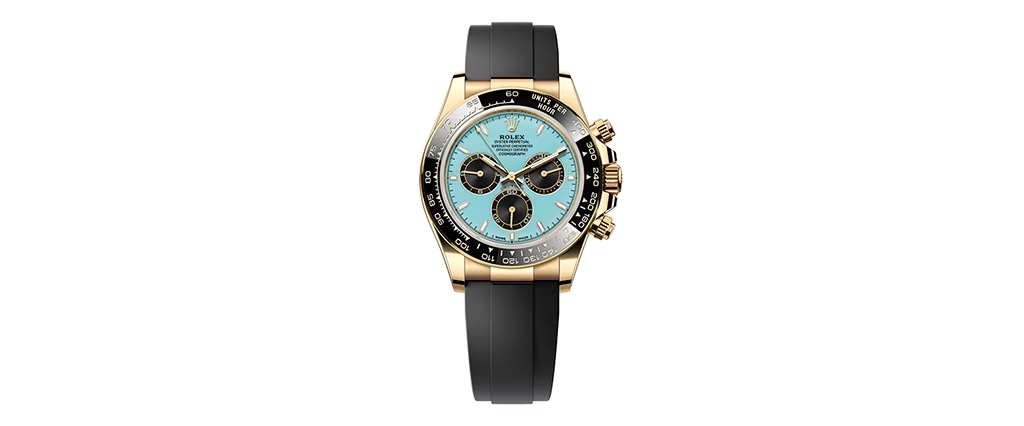
Despite the surge in interest for dress watches and Cartier, it would be a mistake to assume Rolex is losing its crown. The Swiss giant remains the undisputed king of the hill, even as the landscape beneath it shifts.
Stability in a Fluctuating Market
Rolex’s dominance is built on a bedrock of brand equity that transcends trends. The Chrono24-Fratello report indicates that roughly one out of every three watches sold today is a Rolex.
Financial estimates for 2024 peg Rolex’s primary market sales at a colossal 10.6 billion Swiss francs, representing 32.1% of the entire Swiss watch market (up from 26% in 2019). In the secondary market, where Gen Z is most active, Rolex has stabilized at a 33.7% market share. While the “hype” mania of 2021-2022 has cooled, demand has normalized at an incredibly high baseline.
The Daytona’s Rise and the Datejust’s Reign
Even within the Rolex catalog, tastes are evolving. The report notes a significant shuffle in the hierarchy of popularity:
- The Datejust: The evergreen Rolex Datejust remains the #1 collection. Its versatility—straddling the line between dress and sport—makes it the “safe” yet stylish choice for many first-time luxury buyers.
- The Daytona vs. The Submariner: In a surprising twist, the Rolex Daytona has overtaken the Submariner to become the #2 collection in the secondary market.
- The Submariner, the archetypal dive watch, may be suffering slightly from the broader fatigue with steel sports watches.
- The Daytona, however, retains an aura of exclusivity and “grail” status that seems immune to market fatigue.
The takeaway? Even among the anti-conformist Gen Z, “classic always wins.” They may be exploring Cartier and vintage gold, but the aspirational pull of the Crown remains potent.
The “Why” Behind the Buy: Values Driving the Shift
To fully understand these market shifts, we must look beyond the watches themselves to the values of the people buying them. Gen Z is not simply consuming; they are voting with their wallets based on distinct generational principles.
Sustainability and the Pre-Owned Economy
Gen Z is arguably the most eco-conscious generation in history. The concept of “circular economy” is central to their purchasing decisions. Buying a pre-owned or vintage watch is viewed as a sustainable choice—recycling luxury rather than contributing to new manufacturing waste. This ethos perfectly supports the rise of platforms like Chrono24 and the booming interest in vintage dress watches.
Digital Identity and “Watchfluencers”
The democratization of knowledge via the internet has killed the old gatekeepers of the watch industry. Young buyers don’t need to visit a stuffy boutique to learn about horology; they have TikTok, YouTube, and Instagram.
“Watchfluencers” and celebrity style icons (like Timothée Chalamet wearing a vintage Cartier Crash or Tyler, the Creator flaunting a small gold Cartier) have a direct pipeline to Gen Z wallets. These influencers often prioritize aesthetics and rarity over technical specs like water resistance or helium escape valves, further driving the trend toward smaller, dressier timepieces.
Conclusion: A New Horizon for Horology
The H1 2025 report from Chrono24 and Fratello serves as a wake-up call for the watch industry. The “bigger is better” era of the steel sports watch is being challenged by a “smaller, rarer, and dressier” aesthetic championed by the youth.
Gen Z is bringing a fresh perspective to horology—one that values the elegance of a strap over the utility of a bracelet, the history of a vintage Cartier over the hype of a modern diver, and the individuality of a unique find over the ubiquity of a mass-produced status symbol.
As this generation enters its prime earning years, their influence will only grow. Brands that can pivot to meet this demand for elegance and individuality will thrive. Those that continue to rely solely on the trends of the past decade may find themselves fighting for relevance in a market that has already moved on.